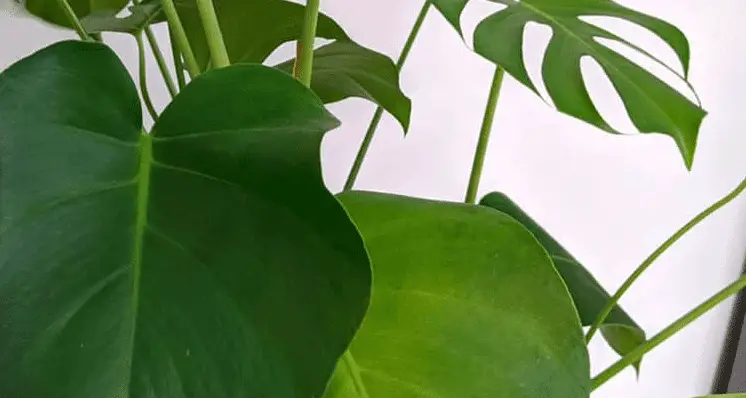
Monstera plants are a beautiful addition to any home, and they are known for their large leaves and impressive vines. Recently, many people have been asking why their monstera plant leaves have fewer and fewer fenestrations, or why their once variegated leaves are now all green.
In this blog post, we will discuss the reasons why this may be happening and what you can do to prevent it. Let’s jump into it…
Why Are Variegated Monstera Leaves Reverting?
This is either due to a survival tactic or another mutation. When a plant is stressed, it will often revert back to its original form in order to survive.
This could be due to a change in environment, such as moving from a shady spot to a sunny one. It could also be caused by too much or too little water, fertilizer, or even temperature changes.
You see, the monstera may revert if it needs a competitive advantage. Variegated monstera plants are vulnerable, so by reverting back to all green it’s gaining a better chance at survival.
The biggest reason for a monstera to lose variegation is due to a lack of sunlight. If your monstera is not getting enough light, it will slowly start to revert.
How Can I Prevent It?
The best way to prevent your monstera from reverting is to give it the proper care it needs. Make sure it’s getting enough sunlight, water, and fertilizer.
Pay special attention to the amount of light it’s getting. If it’s not getting enough, move it to a brighter spot where it will receive a few hours of indirect sunlight each day.
A good place for a monstera is near a window where it will receive bright, indirect light. If you live in a particularly sunny climate, you may need to provide some shade for your monstera during the hottest hours of the day.
Grow lights are a great option if you can’t provide enough natural light. I like using these full-spectrum grow lights because they provide the full spectrum of light that plants need to grow.
Just make sure to place your monstera about 12-16 inches away from the grow light to prevent it from getting too much heat, which could lead to leaf scorch.
You should also check the temperature of the room it’s in. Monsteras like warm temperatures, so if it’s too cold it may trigger a reaction that causes the plant to revert.
Why Are Monster Fenestrations Reverting?
Monstera plants stop producing fenestrations when they are stressed, and the most common stressor is a lack of light. If your monstera isn’t getting enough light, it will slowly stop producing new leaves with fenestrations.
You see, fenestrations have a purpose to help the plant filter light. But if the plant isn’t getting enough light, it doesn’t need to filter as much and will eventually stop producing fenestrations altogether.
Other stressors that can cause a monstera to stop producing fenestrations include too much or too little water, fertilizer, or temperature changes.
How Can I Prevent It?
The best way to prevent your monstera from reverting back to non-fenestrated leaves is to give it enough sunlight. Monsteras need a few hours of indirect sunlight each day to thrive.
Just like with the variegation issue, you can also use grow lights to provide the full spectrum of light that plants need. Use grow lights to supplement the natural light if your monstera isn’t getting enough.
When using grow lights (Amazon link), it is important to start with a high-quality light fixture and position it close to the plant. The good news is that there are many great options on the market these days, so you should be able to find something that works for you.
You should also check the temperature of the room it’s in and make sure it’s not too cold. Warm temperatures are best for monsters, so if it’s too cold it may trigger a reaction that causes the plant to revert.
Conclusion
In conclusion, if your monstera plant is reverting back to all green or non-fenestrated leaves, it’s likely due to a lack of light. The best way to prevent this is to give it enough sunlight and use grow lights if you can’t provide enough natural light.
By following these tips, you can help your monstera stay healthy and prevent it from reverting back to its original form. Do you have a monstera that has reverted back to all green or non-fenestrated leaves? Share your story in the comments below!
If you’ve been growing tomatillos in your garden, you may have noticed that the leaves have started to develop holes. This can be a sign of several different problems, so it’s important to figure out what’s going on and take action to correct it.
In this blog post, we will discuss the possible causes of holes in tomatillo leaves and provide solutions to help you get your plants back on track!
If you are a sunflower gardener, then you may have noticed that your sunflowers have been developing holes in their leaves. Don’t worry, you are not alone! This is a common problem among sunflower gardeners. In this blog post, we will discuss the causes of leaf holes in sunflowers and the best ways to solve the problem.
Why Are There Holes in My Tomatillo Leaves?
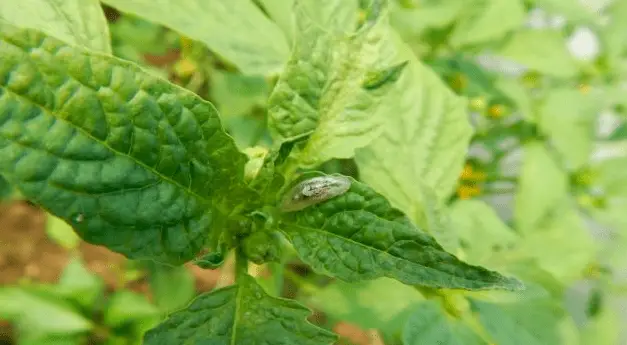
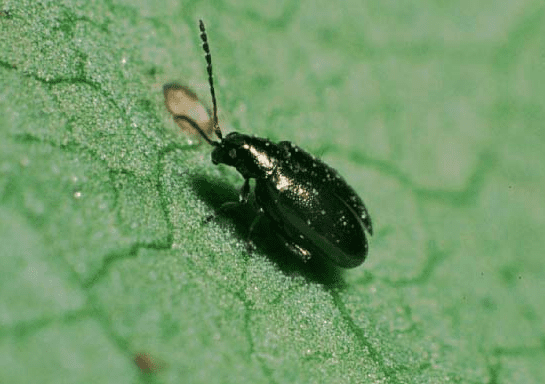
There are holes in your tomatillo leaves because a pest is present and is feeding on the leaves. The most common pests that attack tomatillos are flea beetles, but other pests such as caterpillars, earwigs, and slugs can also cause damage.
To determine if a pest is responsible for the holes in your tomatillo leaves, look for other signs of damage such as chewed leaves or frass (insect droppings). You may also see the actual insects themselves crawling on the plants.
These pests can hide in the soil or in other garden debris, so it’s important to keep your garden clean and free of potential hiding spots. If you find pests on your tomatillo plants, you’ll need to take action to get rid of them.
How to Keep Pests Away From Tomatillo Leaves?
The best way to keep pests away from tomatillo leaves is to use a combination of preventative measures and control methods.
Control Methods:
Remove pests by hand – This is a labor-intensive method, but it can be effective if you’re able to find and remove all of the pests from your plants.
Use neem oil – Neem oil ( Amazon link to my favorite) is a natural pesticide that can be used to control pests on tomatillo plants. It’s made from the seeds of the neem tree and is effective against a wide range of pests.
Use traps – You can purchase sticky traps or make your own using yellow plastic wrap and petroleum jelly. Place the traps near infested plants and check them regularly.
Flea beetle on tomatillo
Preventative Measures:
Keep your garden clean – Remove potential hiding places for pests by keeping your garden free of debris. This will make it harder for them to take up residence in your garden.
Use row covers – Row covers can be used to physically block pests from getting to your plants. They should be placed over the plants before the pests become active in the spring.
Apply insecticidal soap – This is a soap that contains insecticidal properties and can be used to kill pests on contact. It’s safe to use around children and pets and is effective against a variety of common garden pests.
Should I Prune Tomatillo Leaves with Holes?
Yes, you should prune tomatillo leaves with holes to prevent the spread of pests and diseases. Infected leaves should be removed and disposed of immediately. Be sure to sterilize your pruning tools before and after use to avoid spreading the problem.
Pruning tomatillo leaves is an important part of maintaining a healthy plant. By pruning damaged leaves, your plant can focus energy on growing new, healthy leaves.
Conclusion
In conclusion, holes in tomatillo leaves can be caused by pests, diseases, or damage. To prevent holes from forming in the first place, it’s important to practice good garden maintenance and use row covers or insecticidal soap. If holes do appear, prune the affected leaves and dispose of them immediately.
We hope this blog post has been helpful in solving the mystery of the holes in your tomatillo leaves! If you have any further questions, please feel free to reach out to us. Thanks for reading!
Have you ever looked at your strawberry plants and noticed that the leaves have holes in them? This can be a cause for concern, as it may mean that the plant is being attacked by pests or diseases. In this blog post, we will discuss the reasons why strawberry leaves may have holes in them, as well as ways to correct the problem.
Why Are There Holes in My Strawberry Leaves?
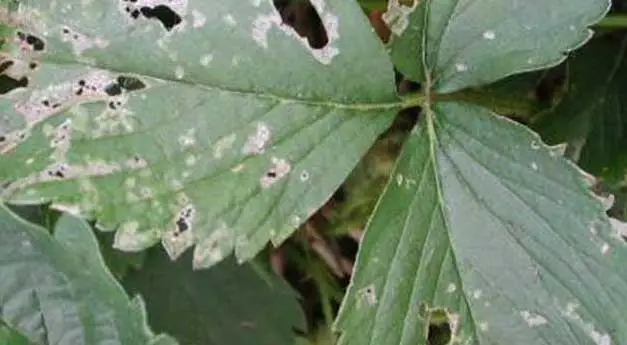
There are holes in your strawberry leaves because a pest has been feeding on them. The most likely culprits are earwigs, but slugs, caterpillars, weevils, and other pests can also cause damage to the leaves.
These pests love the soft, juicy leaves of the strawberry plant, and will often feast on them until the plant is no longer able to produce fruit. In severe cases, the entire plant may be killed.
To determine if pests are the cause of the holes in your strawberry leaves, look for signs of chewing or other damage. You may also see the pests themselves crawling around on the leaves. If you see any of these signs, take action to get rid of the pests as soon as possible.
How to Treat Strawberry Leaves with Holes?
To get your strawberry plants back on track, the pests must be removed. You can do this by handpicking them off of the plants or using a pesticide. Be sure to follow the instructions on the pesticide label carefully, as some pesticides can be harmful to humans and animals if used incorrectly.
My favorite method of pest control is to use neem oil (Amazon link), which is a natural insecticide, and it can be used to control a wide variety of pests, including aphids, whiteflies, and spiders mites.
In addition, neem oil has antifungal and antibacterial properties, making it effective against powdery mildew and black spot. When used as directed, neem oil is safe for humans and pets and can be an effective way to control pests in the garden.
To use neem oil, mix it with water according to the directions on the bottle. Then, spray it onto the strawberry plants, being sure to cover all of the leaves. The neem oil will kill any pests that are present and will also help to prevent new ones from moving in.
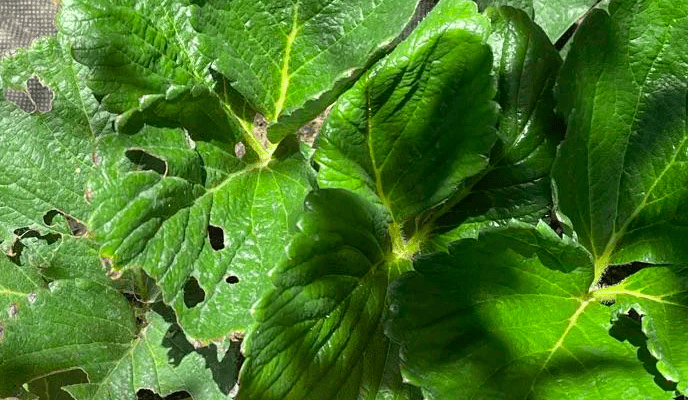
Holes in strawberry leaves from pests
How to Keep Pests Away From Strawberry Leaves?
To prevent pests from damaging your strawberry plants, it is important to keep your garden clean and free of debris. Earwigs and other insects often hide in mulch or other organic matter, so be sure to remove any potential hiding places from around your plants.
You could also use beneficial insects, such as ladybugs, to help control the pests in your garden. Ladybugs are natural predators of earwigs and other small insects, which can help to keep them under control.
Another way to prevent pests from damaging your strawberry plants is to use row covers. Row covers are pieces of fabric that can be placed over the plants to keep pests from getting to the leaves.
By taking these preventative measures, you can help to keep your strawberry plants healthy and free of pests. If you do find pests on your plants, be sure to take action immediately to get rid of them.
What Else Causes Holes in Strawberry Leaves?
Pests are not the only thing that can cause holes in strawberry leaves:
Disease
Several diseases can cause holes in strawberry leaves. Anthracnose, for example, is a fungal disease that affects many types of fruit trees and plants. If you notice dark spots on the leaves or stems of your strawberry plants, this could be a sign of anthracnose.
Animals
Sometimes, animals will also eat the leaves of strawberry plants. Birds, deer, and rabbits are all known to enjoy a tasty strawberry leaf now and then. If you notice that your plants are being eaten, you may need to take action to keep the animals away.
Should I Prune Strawberry Leaves with Holes?
Once your strawberry plants are free of pests and disease, you may be wondering if you should prune the leaves that have been damaged.
In most cases, pruning can be a good idea because it can help the plant to focus its energy on new growth. However, you should only prune away leaves that are truly damaged beyond repair.
Pruning strawberry plants too heavily can actually do more harm than good, so be sure to only remove the leaves that are absolutely necessary.
When pruning your strawberry plants, be sure to use clean, sharp pruning shears. This will help to prevent the spread of disease and will also give you a nice, clean-cut.
Conclusion
In conclusion, holes in strawberry leaves can be caused by pests, diseases, or animals. To prevent these problems, be sure to keep your garden clean and free of debris.
Use neem oil to get rid of any pests that are present, and use row covers to keep new ones from coming in. If you do find pests on your plants, be sure to take action immediately to get rid of them.
I hope this article was helpful in answering your questions about holes in strawberry leaves. If you have any further questions, please feel free to leave a comment below. Thanks for reading!
Bok choy is a delicious and healthy vegetable that is often enjoyed in stir-fries and salads. However, many people are dismayed to find small holes in the leaves of their bok choy plants. In this blog post, we will discuss the possible causes of these holes and how to solve the problem!
Why Are There Holes in My Bok Choy Leaves?
There are holes in your bok choy leaves because a pest is using them as a food source. The most likely culprits are caterpillars, slugs, or snails. The most common pests that eat bok choy leaves are flea beetles, cabbage loopers, aphids, slugs, weevers, cutworms, and cabbageworm larvae.
These pests are attracted to the soft, tender leaves of the bok choy plant and will munch on them relentlessly if given a chance. The holes they leave behind will be small and ragged, and the leaves will eventually turn yellow and die if the infestation is not controlled.
You may not even know pests are present as they often feast at night when you are not around to see them. Try to inspect your bok choy before bed or first thing in the morning to catch them in the act.
If you see any pests, you will need to take action to get rid of them. Read on for some tips on how to do this!
How to Keep Pests Away From Bok Choy Leaves?
To treat the current infestation, you will need to remove the pests by hand or with a pesticide. For caterpillars and other crawling insects, simply pluck them off the plant and dispose of them far away from your bok choy.
To get rid of them for good, neem oil is a great natural pesticide that will kill caterpillars, aphids, and other pests. It’s a natural, non-toxic way to keep your plants healthy and pest-free!
The best way to keep pests away from bok choy leaves is to prevent them from getting to the plant in the first place. This can be done by creating a physical barrier such as a fence or netting around the perimeter of your garden.
You can also try using traps, such as yellow sticky traps, to catch and kill pests before they have a chance to eat your bok choy leaves. If you do find pests on your plants, you can pick them off by hand or blast them with water from a hose.
Another way to keep pests away is to encourage predators such as ladybugs, lacewings, and parasitic wasps into your garden. These helpful insects will feed on the pests that are eating your bok choy leaves!
What Else Can Cause Holes in Bok Choy?
Pests are not the only things that can cause holes in bok choy leaves…
Fungal Disease
If you live in an area with high humidity, your plants may be susceptible to fungal diseases such as powdery mildew or downy mildew.
Fungal diseases are difficult to control, but you can try using a fungicide to get rid of them. Again, neem oil is a great natural option that will kill the fungi without harming your plants.
You can also try to prevent fungal diseases from happening in the first place by increasing air circulation around your plants by thinning them out or pruning them back.
Animals
Holes in bok choy leaves can also be caused by physical damage. If you see large, clean-cut holes in the leaves of your bok choy, it is likely that an animal has been nibbling on them.
The most common culprits are rabbits, deer, and groundhogs. These animals are attracted to the tender leaves of the bok choy plant and will eat them if given a chance.
You can keep these animals away by erecting a fence around your garden, or by using repellents such as predator urine or soap shavings.
Should I Prune Bok Choy Leaves with Holes?
Pruning seriously damaged leaves is a good way to prevent the spread of pests and diseases. It also allows the plant to focus its energy on growing new, healthy leaves.
To prune bok choy leaves, simply cut off the damaged leaves at the base of the plant. Be sure to dispose of them far away from any other plants or gardens to prevent the pests from spreading.
Pruning bok choy leaves will not solve the underlying problem of pests, but it is a good way to keep the plant healthy while you work on getting rid of the pests for good.
Conclusion
In conclusion, it’s likely that pests are responsible for the holes in your bok choy leaves. To get rid of them, you will need to take action to remove the pests and prevent them from returning.
Try using a natural pesticide such as neem oil, or creating a physical barrier around your garden. You could also encourage predators into your garden to help keep the population of pests under control.
We hope this blog post has been helpful in solving the mystery of the holes in your bok choy leaves! If you have any further questions, please feel free to reach out to us. We would be more than happy to help!
If you’re like me, you love okra. It’s a delicious vegetable that is low in calories and high in fiber. But if you’ve ever grown okra, you may have noticed that the leaves sometimes develop holes. What causes this, and what can be done to prevent it? In this blog post, we will discuss the causes of holes in okra leaves and some solutions to fix the problem.
Why Are There Holes in My Okra Leaves?
There are holes in your okra leaves because a pest is chewing on them. The most likely culprits are flea beetles, aphids, earworms, caterpillars, and cabbage loopers.
Take a closer look at your okra leaves and see if you can spot any of these pests. If so, take steps to control them (see below). They may be hiding nearby in the soil, on other plants, or in nearby weeds.
Many of these pests come out at night, so it may be helpful to inspect your plants in the evening or early morning. If you don’t see any pests, the holes may have been caused by a fungal disease called Alternaria leaf spot.
Alternaria leaf spot is a common problem in okra plants. The fungus infects the leaves and causes small, dark spots. These spots eventually turn into large, brown lesions. The lesions may be surrounded by a yellow halo.
How to Control the Pests That Cause Holes in Okra Leaves
There are a number of ways to control pests that cause holes in okra leaves. You can handpick them off of the plant, use row covers or floating row covers to keep them from getting to the plant, or use an insecticide.
If you handpick the pests off of the plant, be sure to dispose of them in a sealed container so they can’t escape and infect other plants.
Row covers are pieces of fabric that are placed over the plants and secured at the ground. Floating row covers are placed over the plants and held up by hoops.
My favorite insecticide is neem oil (Amazon link). Neem oil is a natural product made from the seeds of the neem tree. It’s safe for humans and animals, and it’s very effective at controlling pests.
If you use an insecticide, be sure to follow the instructions on the label carefully. Some insecticides can be harmful to humans, so it’s important to use them correctly. You may need to apply the insecticide more than once to get rid of all of the pests.
How to Prevent Holes in Okra Leaves
To prevent holes in okra leaves, start with healthy plants. Avoid planting okra in the same spot where it was planted last year. Rotate your crops so that different plants are grown in that spot each year. This will help prevent pests and diseases from getting established in one area.
Another way to prevent holes in okra leaves is to keep the area around the plants clean. Remove all weeds, dead leaves, and other debris. This will help reduce the places where pests can hide.
Inspect your okra plants regularly for pests. If you see any, take steps to control them right away. The sooner you get rid of the pests, the less damage they’ll do to your plants.
Should I Prune Okra Leaves with Holes?
It can be a good idea to prune okra leaves that have holes. This will help the plant direct its energy to other parts of the plant. When pruning, be sure to cut the leaves off at the point where they attach to the stem.
Pruning okra plants may also help prevent disease. Diseases can spread through holes in the leaves, so by removing the infected leaves, you can help stop the spread of disease.
Conclusion
In conclusion, holes in okra leaves are usually caused by pests or diseases. To prevent holes, start with healthy plants and keep the area around the plants clean. Inspect your plants regularly for pests and diseases and take steps to control them immediately. Pruning infected leaves can also help prevent the spread of disease.
I hope you found this blog post helpful. If you have any questions, please leave a comment below. Thanks for reading!