by Gardener Tim | May 19, 2022 | House Plants
Monstera, also known as the Swiss Cheese Plant, is a beautiful and popular houseplant. It’s easy to see why – the leaves are large and dramatic, and they can grow quite tall. But there’s been some concern lately about whether or not monstera plants have invasive roots. Let’s take a closer look at this plant and find out!
Does Monstera Have Invasive Roots?
No, monstera does not have invasive roots. In fact, its roots are quite shallow and easily contained. The plant doesn’t need a lot of root space to thrive, so it’s perfect for growing in pots and containers.
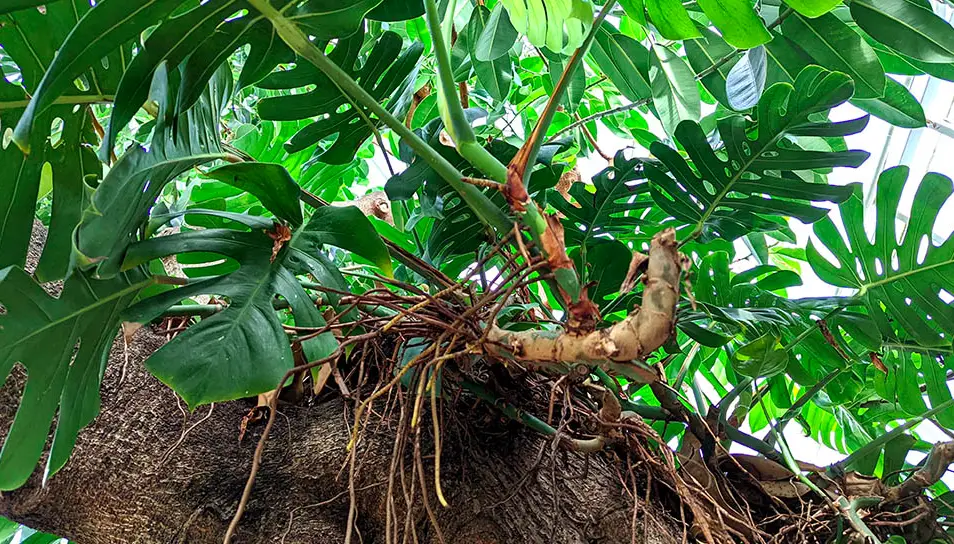
However, monstera plants grow aerial roots that can grow large and climb walls. you’ll notice these roots growing down from the stem of the plant, and they can get quite long. While they’re not technically invasive, they can be a bit of a nuisance if you’re not careful.
So, there you have it – monstera plants are not invasive. But be sure to keep an eye on those aerial roots! If you need help controlling them, check out our article on how to trim monstera roots.
How to Stop Monstera from Becoming Invasive?
If you want to control your monstera and its aerial roots, there are a number of things you can do:
1. Keep it inside a pot
Monstera plants are indoor plants that can be kept inside pots. By keeping your plant in a pot, you can control its growth and prevent it from becoming too large. The roots will run out of space to grow, and the plant will stay contained.
Pots also make it easy to move your monstera around, so you can put it in a sunny spot or keep it out of the way of curious pets, especially if you own rabbits or other pets that can eat monstera.
There are a number of different pots you can choose from, but make sure that the pot has drainage holes to allow excess water to escape. This will prevent the plant from becoming waterlogged and will help to keep the roots healthy.
2. Trim aerial roots
As we mentioned, monstera plants produce aerial roots that can get quite long. If you don’t want these roots to become a nuisance, you can trim them back.
To do this, simply use a sharp pair of scissors or pruning shears to cut the root off at the desired length. You can also remove any aerial roots that are growing in an unwanted direction.
Be sure to sterilize your tools before trimming the roots, and make sure to wear gloves to protect your hands. After you’ve trimmed the roots, you can place the plant back in its pot or container.
3. Use a grow/moss pole
If you want your plant to grow tall, you can use a grow or moss pole. These poles provide support for the plant and help it to climb.
To use a grow/moss pole, simply insert the pole into the pot next to the plant. The roots will wrap around the pole and begin to climb. You can then reposition the pole as needed.
Moss poles are especially helpful if you want to control the direction of your plant’s growth. I’ve written a few articles about how to use grow poles and moss poles, which you can check out here.
There you have it – three easy ways to prevent monstera from becoming invasive. By following these tips, you can keep your plant under control and enjoy its beauty for years to come.
Does Monstera Have Deep Roots?
No, monstera does not have deep roots. The roots of this plant are quite shallow, which is why it’s so easy to grow in pots and containers. Monstera doesn’t need a lot of root space to thrive, so you don’t have to worry about it taking over your garden.
However, monstera plants do have aerial roots that can grow quite long. These roots grow down from the stem of the plant, and they can get up to several feet in length.
Will Monstera Aerial Roots Damage Walls?
Aerial roots can damage walls if they’re not properly trimmed. The roots are quite strong, and they can cause cracks and other damage as they grow. If you have aerial roots growing on your walls, be sure to trim them regularly to prevent any damage.
The roots won’t suddenly grow huge and strong, so you have plenty of time to prune them or move the plant if necessary. In fact, some people like it when their monstera roots climb walls! Just be sure to keep an eye on them and trim them as needed.
Conclusion
In conclusion, monstera does not have invasive roots. However, the aerial roots can grow long and climb walls, so be sure to keep an eye on them. I hope this article was helpful in answering your question!
Thanks for reading!
by Gardener Tim | May 19, 2022 | Facts
Many people have heard of the Monstera plant, but are unsure if it is safe for their pet cockatiel to eat. Cockatiels are omnivorous birds and can eat a variety of fruits and vegetables.
However, not all plants are safe for them to consume. In this blog post, we will discuss whether or not cockatiels can eat Monstera plants, and provide some tips on how to safely introduce this food into their diet.
Can Cockatiels Eat Monstera?
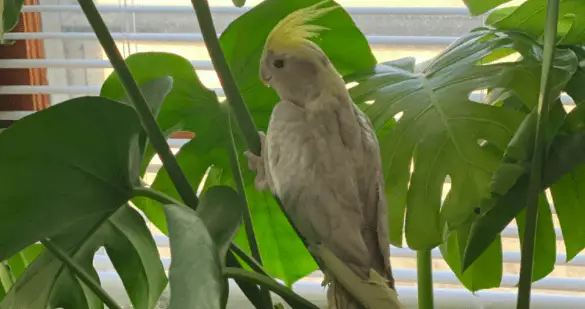
No, cockatiels can’t eat Monstera. The plant contains calcium oxalate crystals, which are poisonous to birds. If your cockatiel ingests these crystals, they may experience difficulty breathing, paralysis, and kidney failure.
Although scary, this shows that it is important to do your research before feeding your cockatiel any new food, even if it is a plant that you think is safe.
What to Do If My Cockatiel Ate Monstera Plant?
If you think your cockatiel has eaten any part of the monstera plant, it is important to take them to the vet immediately. The vet will be able to provide supportive care and monitor your cockatiel for any signs of illness.
It is also a good idea to keep an eye on your cockatiel for the next few days, even if they seem fine. Some symptoms of toxicity may not appear until a few days after ingestion.
The good news is that, with prompt treatment, most cockatiels make a full recovery from ingesting the monstera plant. However, it depends on how much of the plant they ate and how quickly they received treatment.
To be safe, it is best to err on the side of caution and take your cockatiel to the vet as soon as possible if you think they have eaten any part of the monstera plant.
How to Prevent Cockatiel From Eating Monstera?
There are a few things you can do to prevent your cockatiel from eating the monstera plant. Let’s go over a few of them now:
1. Out of reach
First and foremost, it is important to keep the plant out of reach of your cockatiel. If the plant is in a pot, you may want to consider hanging it from the ceiling or placing it on a high shelf.
Of course, this may be hard to do with a flying bird… You can also put it in a room that your cockatiel does not have access to. For example, if you have a pet bird that is not allowed in the kitchen, then you could put the monstera plant in there.
2. Cover the plant
Another option is to cover the plant with a mesh screen or netting. This will prevent your cockatiel from getting to the plant, but will still allow it to get light and air.
Cockatiels are curious birds and will often chew on things to see if they are edible. This means that, even if the plant is covered in netting, they may still be able to get to it if they are determined enough.
If your cockatiel is still able to nibble on the leaves, you may want to try covering the plant in a solid material, such as a blanket or towel.
3. Repellent spray
There are also commercial repellent sprays that you can buy. These usually contain ingredients that are safe for birds but will keep them away from the area where the spray was applied.
You can find these sprays at your local pet store or online. Just make sure to read the label carefully to ensure that it is safe for use around birds.
Conclusion
In conclusion, cockatiels cannot eat monstera plants as they are poisonous to birds. If you think your cockatiel has eaten any part of the plant, it is important to take them to the vet immediately. There are also a few things you can do to prevent your cockatiel from getting to the plant in the first place.
Do you have any questions or concerns about feeding plants to your cockatiel? Let us know in the comments below!
by Gardener Tim | May 18, 2022 | House Plants, Plant Care
If you’ve been caring for a pothos plant and noticed that the stems have turned brown, you’re likely wondering what’s going on. This is a common problem for pothos growers, but it’s not always easy to determine the cause or how to fix it.
In this blog post, we’ll take a look at some of the most common reasons why pothos plants develop brown stems and provide some tips on how to correct the issue.
Why Does My Pothos Have Brown Stems?
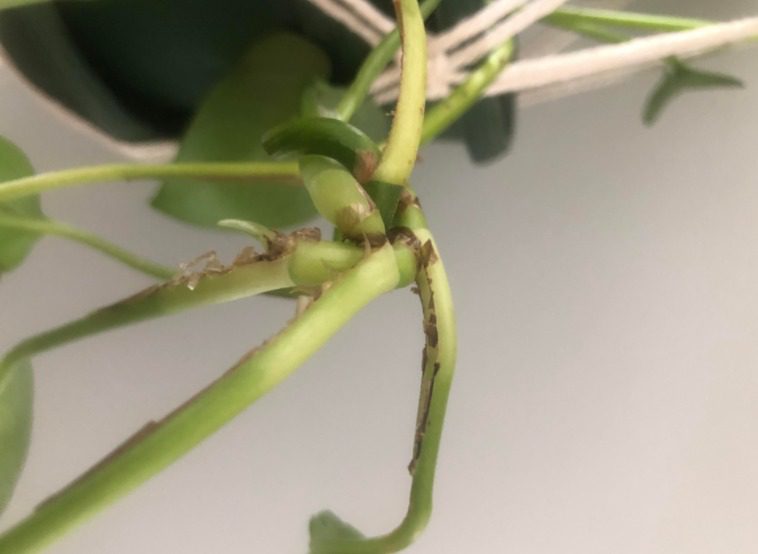
The browning on your pothos stem is likely from the new leaf sheath that is growing. As the new leaf begins to grow, it pushes against the old leaf, causing it to turn brown and wither away.
This means you have healthy pothos that is maturing and going through their natural growth cycle – nice work! This sheaf protects the new stem/leaf as it’s growing. Once the sheaf is no longer needed, it drys out, turns brown, and eventually falls off.
This brown sheaf can be carefully removed by hand if you’d like, but it’s not necessary and will eventually fall off on its own.
However, if you notice that the browning is spreading quickly or affecting a large portion of the plant, it could be a sign of something more serious. Here are a few other reasons why your pothos plant might have brown stems:
Too much water
If the stem is soft and mushy to the touch, it’s likely that your plant is getting too much water. The roots are not able to adequately drain the excess moisture, causing the stem to rot.
Similarly, if the browning stem is near the base of the plant where it’s sitting in water, it could be a sign of over-watering. Check the drainage of your pot and make sure that the plant is not sitting in water for extended periods of time.
You may also want to check the roots for signs of root rot. If they are mushy or have turned brown or black, quick action is necessary to save the plant.
Remove the affected roots and replant them in fresh, well-draining soil. Allow the soil to dry out completely between watering to prevent further root rot.
Too much direct sunlight
Pothos plants are notoriously hard to kill, but one thing they don’t tolerate well is direct sunlight. If the browning on the stems is accompanied by yellow leaves, it’s likely that your plant is getting too much sun.
Just like humans, the sun can scorch and damage the leaves of a pothos plant, causing them to turn brown and wither away. Move your plant to an area with indirect or filtered light and you should see the browning start to improve.
Not enough water or humidity
While too much water can cause problems for pothos plants, not enough water can be just as damaging. If the leaves of your plant are wilting or drooping, it’s a sign that they’re not getting enough moisture.
Use a misting bottle to give the leaves a light spray of water, being careful not to saturate them. You can also increase the humidity around your plant by placing it on a pebble tray or using a humidifier.
Disease or pests
If the browning on your pothos plant is accompanied by other symptoms like spots or holes in the leaves, it could be a sign of disease or pests. Inspect your plant carefully and look for any signs of insects or fungal growth.
Treat the affected areas with an appropriate pesticide or fungicide and quarantine the plant from your other houseplants to prevent the spread of disease.
Neem oil is a natural and effective pesticide that can be used to control a wide variety of pests, including aphids, whiteflies, and mealybugs. It’s organic and safe to use around children and pets.
Fertilizer problems
It’s no secret that pothos needs plenty of nutrients to thrive. In fact, a lack of nutrients can itself lead to the discoloration of leaves and stems.
But have you ever heard of fertilizer burn? It’s a common problem that can occur when plants are over-fertilized. If you’ve recently fertilized your pothos plant and the stems have started to turn brown, it’s likely that you’ve applied too much fertilizer.
Flush the soil with water to remove any excess fertilizer and be sure to follow the directions on the fertilizer package to avoid this problem in the future.
Conclusion
In conclusion, if your pothos plant has brown stems, it’s likely due to the natural growth cycle of the plant. The brown part is simply the old leaf sheath that is being replaced by a new one.
However, if the browning is excessive or accompanied by other symptoms, it could be a sign of too much or too little water, direct sunlight, disease, or pests. Inspect your plant carefully and take action accordingly to get it back to good health. Thanks for reading!
by Gardener Tim | May 18, 2022 | Plant Care
If you’re like a lot of gardeners, you may be wondering if it’s safe to use neem oil on tomato plants. Neem oil is a natural pesticide that is made from the seeds of the neem tree.
It is effective at controlling a variety of pests, including aphids, spider mites, and whiteflies. In this blog post, we will explore the benefits of using neem oil on tomato plants and provide some tips on how to do it safely!
Can You Use Neem Oil on Tomato Plants?
Yes, you can use neem oil on tomato plants! Neem oil is a natural pesticide that is made from the seeds of the neem tree. It is effective at controlling a variety of pests, including aphids, spider mites, and whiteflies.
This means your tomatoes will be better protected from pests and will be more likely to produce a bountiful harvest! Neem oil is also a fungicide, so it can help to prevent diseases such as blight from taking hold of your plants.
When using neem oil on tomato plants, be sure to follow the instructions on the product label. This will ensure that you are using the product safely and effectively.
Benefits of Neem Oil on Tomatoes
There are many benefits to using neem oil on tomatoes. In fact, not using neem oil on tomatoes could put your entire crop at risk! Neem oil is a natural pesticide that is made from the seeds of the neem tree.
1. Pesticide
The first benefit of neem oil is that it can act as a pesticide. Neem oil is effective at controlling a variety of pests, including aphids, spider mites, and whiteflies. This means your tomatoes will be better protected from pests and will be more likely to produce a bountiful harvest!
If any insect tries to take a bite out of your tomato plant, the neem oil will automatically kill the pests – phew!
2. Fungicide
The second benefit of neem oil is that it can act as a fungicide. Neem oil is a natural fungicide, which means fungal diseases, such as blight, will have a harder time taking hold of your tomato plants.
This is great news for gardeners who live in areas where fungal diseases are common. By using neem oil on their tomato plants, they can help to prevent these diseases from ruining their crop!
3. Antimicrobial
The third benefit of neem oil is that it has antimicrobial properties. This means that neem oil can help to prevent bacterial diseases, such as black rot, from infecting your tomato plants.
Tomatoes are susceptible to a variety of diseases, so using a product like a neem oil is a great way to keep them healthy!
4. Fertilizer cakes
The fourth benefit of neem oil is that it can be used as a fertilizer. Neem oil cakes are a by-product of the neem tree, and they make an excellent fertilizer for tomato plants!
Neem oil cakes are rich in nitrogen, phosphorus, and potassium – all essential nutrients for healthy tomato plants. By using a neem oil cake as a fertilizer, you can give your tomatoes the boost they need to produce a bountiful harvest.
5. Organic
The fourth benefit of neem oil is that it is an organic product. This means it is not only safe for your plants, but also for the environment. Neem oil is a natural pesticide that is made from the seeds of the neem tree.
As it is a natural product, it does not contain any synthetic chemicals or pollutants. This makes it a great choice for gardeners who are looking for an environmentally friendly way to control pests and diseases in their garden!
How to Use Neem Oil on Tomato Plants?
Now that we know the benefits of using neem oil on tomatoes, let’s take a look at some tips on how to do it safely.
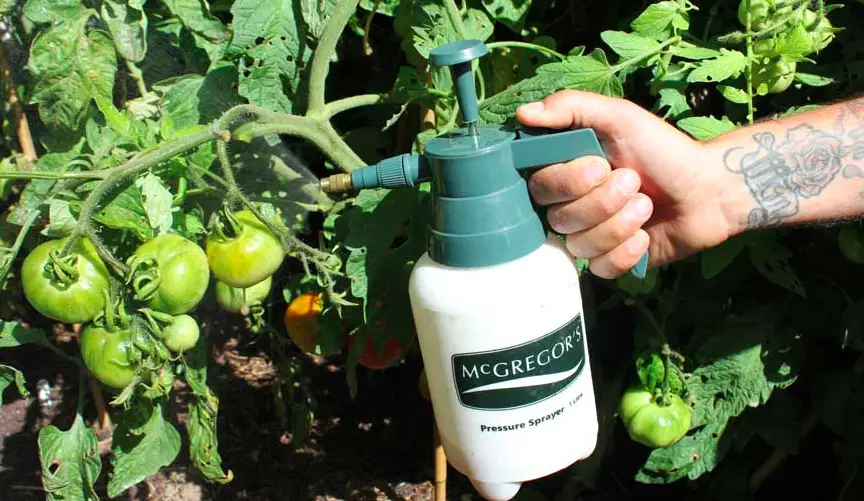
When using neem oil on tomato plants, be sure to follow the instructions on the product label. This will ensure that you are using the product safely and effectively.
It is also important to make sure that you apply the neem oil to the plants when they are dry. If the leaves of your tomato plants are wet, the neem oil will not be as effective.
Finally, remember that a little goes a long way! When using neem oil on your tomato plants, be sure to use it sparingly.
When is the Best Time to Apply Neem Oil to Tomatoes?
To protect butterflies and other beneficial insects, it is best to apply neem oil to your tomato plants in the evening. This will give them time to fly away before the neem oil has a chance to take effect.
It is also important to make sure that you apply the neem oil to the plants when they are dry. If the leaves of your tomato plants are wet, the neem oil will not be as effective.
It’s also a good idea to only use neem oil on your tomatoes when the weather is below 90 degrees Fahrenheit. If it’s too hot, the neem oil may damage your plants.
Conclusion
In conclusion, yes – you can use neem oil on tomato plants! Neem oil is a natural pesticide that is made from the seeds of the neem tree. It is effective at both controlling pests and stopping fungal diseases. In fact, not using neem oil is putting your entire crop at risk!
When using neem oil, be sure to follow the instructions on the product label. This will ensure that you are using the product safely and effectively. Also, remember to apply the neem oil to your plants when they are dry.
I hope this article has been helpful and that you will now start using neem oil on your tomato plants! Thanks for reading.
by Gardener Tim | May 18, 2022 | Facts, Plant Care
It’s the middle of summer and you’re running around trying to get ready for your weekend. You stop to pick up a few things from the grocery store, and on your way out you remember that you meant to buy some plants for your wife.
You toss them in the car and head out, but when you get to your destination several hours later, the plants aren’t looking great. What happened? Will the plants survive?
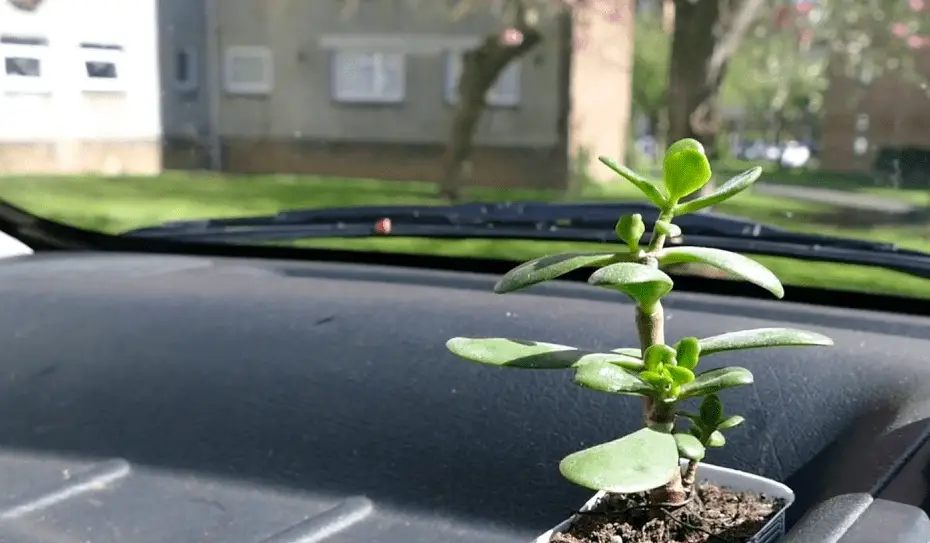
In this article, we’ll explore what happens to plants when they’re left in a hot car, and whether or not they’ll be able to recover. Let’s get started…
Will Plants Die in a Hot Car?
Leaving a plant in a car for a short period of time probably won’t kill it, but if the plant is left in a hot car for an extended period of time, it will likely die.
Whether or not plants survive being left in a hot car depends on a few different factors, including the type of plant, the temperature inside the car, and the amount of time the plant is left in the car.
For example, succulents and cacti are much more tolerant to heat than other types of plants, so they’re more likely to survive being left in a hot car.
On the other hand, plants that are already stressed from too much heat or not enough water are more likely to die if they’re left in a hot car.
The temperature inside a car can get incredibly hot, even on days that aren’t particularly warm outside. On a sunny day, the temperature inside a car can reach up to 160 degrees Fahrenheit, and on hot days it can be even higher.
This is a problem for plants because they can only tolerate a certain amount of heat before they start to experience damage.
How to Keep Plants Alive in a Hot Car?
There are a few things you can do to help your plants survive being left in a hot car.
1. Park in an area of shade
First, try to choose a shady spot to park the car. This will help to keep the temperature inside the car from getting too hot. If you can’t find a shady spot, cover the windows of the car with blankets or towels to help keep the inside of the car cooler.
2. Place plants in the footwell
You can also place the plants on the floor of the car instead of on the seat, which will help them stay cooler. The sun is less likely to reach the plants in the footwell, but it’s still going to be pretty hot down there.
3. Keep windows slightly open
Plants need airflow to stay alive, so make sure to crack the windows of the car open a bit. Not only will this give them the air they need to survive, but it will also help to keep the inside of the car cooler.
4. Water the plants well before you leave
Make sure to water the plants well before you leave them in the car. The plant will need a lot of water to survive the heat, so give it a good watering before you go.
You should also consider giving the plant a light misting with water before you put it in the car. The leaves are prone to burning, so a light misting will help to keep them from drying out too much.
5. Drive carefully
Finally, be careful when you’re driving. Avoid making sudden stops or sharp turns, as this can cause the plant to fall over and possibly break its pot. Try and position the plant so that it won’t fall over if the car stops suddenly.
If you follow these tips, your plants should be able to survive being left in a hot car. Just remember that the hotter it is outside, the more likely it is that your plants will suffer damage.
On days when the temperature is above 90 degrees Fahrenheit, it’s best to leave your plants at home where they’ll be safe and cool.
Benefits of Keeping Plants in a Car?
There are actually a few benefits to keeping plants in your car, as long as you manage the heat properly.
1. Air purifying
One benefit of having plants in your car is that they help to purify the air. Plants take in carbon dioxide and release oxygen, which can help to improve the quality of the air inside your car.
This is especially beneficial if you have allergies or asthma, as the plants can help to filter out pollen and other allergens from the air.
Additionally, plants can help to absorb pollutants from the air, such as car exhaust and fumes. This can help to make the air inside your car cleaner and healthier to breathe.
2. Creates a relaxing environment
Another benefit of keeping plants in your car is that it can help to create a more relaxing environment. The presence of plants has been shown to reduce stress and anxiety, so having them in your car can help you to feel more relaxed while you’re driving.
Looking at plants has also been shown to improve mood and focus, so if you’re feeling tired or overwhelmed, taking a moment to look at your plants can help to improve your mood and increase your focus.
Conclusion
In conclusion, plants can die if they’re left in a hot car for an extended period of time. The type of plant, the temperature inside the car, and the amount of time the plant is left in the car all play a role in whether or not the plant will survive.
There are some things you can do to help your plants survive being left in a hot car, like parking in a shady spot and covering the windows of the car with blankets or towels.
I hope this article has been helpful. If you have any questions, please leave a comment below and I’ll do my best to answer them. Thanks for reading!