Do you have a garden full of eggplants with holes in the leaves? You’re not alone. This is a common problem that many gardeners face. Don’t worry, though – we’re here to help. In this blog post, we will discuss the reasons why leaves on eggplants often develop holes, and we will provide some solutions to fix the problem.
Why Are There Holes in My Eggplant Leaves?
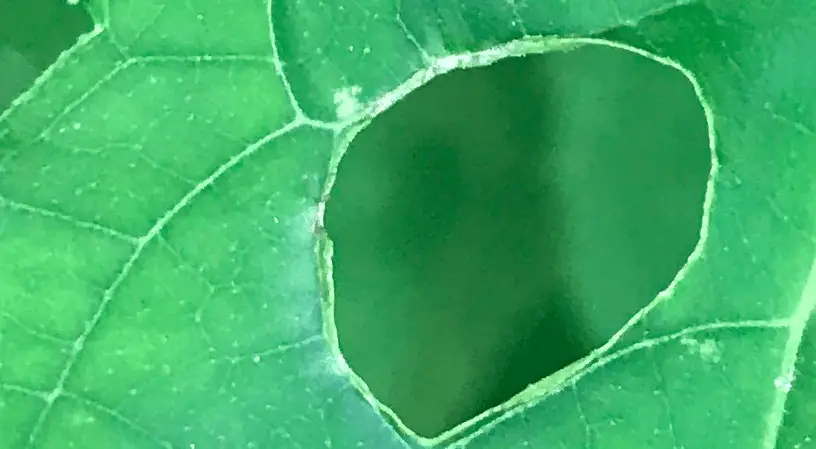
There are holes in your eggplant leaves because a hungry pest has been munching on them! The most common eggplant pest is the flea beetle. Flea beetles are small, black bugs that jump like fleas when disturbed.
These beetles love to feast on eggplant leaves, and they can do a lot of damage in a short amount of time. Other pests that chew eggplant leaves include caterpillars, cutworms, and grasshoppers.
To determine if pests are the cause of the holes in your eggplant leaves, get up early to inspect your plants. Look for small, black bugs or green caterpillars crawling around on the leaves.
How to Treat Eggplant Leaves with Holes?
To tackle the issue of pests, you’ll need to remove them as soon as possible. You can do this by manually removing them or by spraying your plants with an insecticide.
My favorite type of insecticide to use is neem oil. When used as directed, neem oil is safe for humans and pets and can be an effective way to control pests in the garden.
To use neem oil, mix it with water in a garden sprayer and apply it to your eggplants. Be sure to cover the tops and bottoms of the leaves, as well as the stems. You’ll need to reapply neem oil every few days to keep pests away.
How to Keep Pests Away From Eggplant Leaves?
Prevention is the best cure when it comes to dealing with pests in the garden. To keep flea beetles and other pests away from your eggplant leaves, start by planting your eggplants in an area that is free of debris.
Remove any weeds, dead leaves, or other organic matter from around your plants. This will remove the hiding places that pests love to use.
You can also use row covers to keep pests away from your eggplants. Row covers are pieces of fabric that you lay over plants to create a barrier.
To use row covers, drape them over your eggplants and secure the edges with soil or rocks. This will prevent flea beetles and other pests from getting to your plants.
What Else Causes Holes in Eggplant Leaves?
There are other reasons why eggplant leaves develop holes, including:
Disease
Eggplants are prone to diseases, like blight, that can cause holes in the leaves. Be on the lookout for other symptoms of the disease, like discolored leaves or stunted growth.
Is it likely too late to save your eggplant plants if they have a disease? Yes, unfortunately, once a plant is infected with a disease, it is often too late to save it.
Neem oil is usually a good fungicide, so if you think your eggplant leaves have a fungal disease, apply neem oil as soon as possible.
Herbicides
If you use herbicides in your garden, it’s possible that the holes in your eggplant leaves are being caused by drift. Drift is when herbicide particles move through the air and land on plants that you didn’t intend to treat.
To prevent drift, always follow the manufacturer’s instructions when applying herbicides. Be especially careful on windy days.
Bad Weather
Harsh weather conditions, like wind, can cause holes in eggplant leaves. If you live in an area with high winds, make sure to stake your eggplants or build a fence around them to protect them from the wind. You can also use row covers to protect your plants from bad weather.
Animals
Last but not least, animals can cause holes in eggplant leaves. If you have deer or rabbits in your area, they may be eating your eggplants. Rabbits will also eat the stems of eggplant plants, which can kill the plant.
The best way to keep animals away from your eggplants is to build a fence around your garden. You can also try using scare tactics, like hanging shiny objects in the garden or playing loud music.
Should I Prune Eggplant Leaves with Holes?
If you have eggplant leaves with holes, you may be wondering if you should prune them. The answer is, that it depends.
If the holes are caused by disease or pests, then you should remove the affected leaves from the plant. This will help to prevent the spread of disease and keep pests away from your other plants.
If the holes are caused by bad weather or animals, then you don’t need to prune the leaves. The leaves will eventually grow back. However, pruning can help the plant to grow new leaves faster.
Conclusion
In conclusion, holes in eggplant leaves can be caused by many different things, including disease, pests, bad weather, and animals. Flea beetles are the biggest pests that affect eggplant plants.
The best way to prevent holes in eggplant leaves is to practice prevention. This includes planting in an area that is free of debris, using row covers, and being careful when applying herbicides.
I hope this article has helped you to understand the reasons why eggplant leaves develop holes and what you can do to prevent it. Happy gardening!
If you are a sunflower gardener, then you may have noticed that your sunflowers have been developing holes in their leaves. Don’t worry, you are not alone! This is a common problem among sunflower gardeners. In this blog post, we will discuss the causes of leaf holes in sunflowers and the best ways to solve the problem.
Why Are There Holes in My Sunflower Leaves?
There are holes in your sunflower leaves because a pest has been eating them! The most common pests that eat sunflower leaves are beetles, caterpillars, and slugs. These pests are attracted to the leaves of sunflowers because they are full of nutrients.
Pests spread quickly and can do a lot of damage to your sunflower plants. If you see one pest, there is likely more hiding in the leaves. You may not even know they are there until you see the damage they have done!
To find out the exact type of pest that is eating your sunflower leaves, you will need to take a close look at the damage. Caterpillars and slugs leave behind slimy trails, while beetles leave behind small holes.
You could also leave out a bait trap to catch the pests. For caterpillars, you can use a pheromone trap. For beetles, you can use a yellow sticky trap. This will show you what type of pest is eating your sunflowers.
How to Keep Pests Away From Sunflower Leaves?
Once you have identified the type of pest, you can start to control them. The best way to do this is by using pesticides that are specifically designed to kill that type of pest.
I recommend using neem oil (Amazon link), as it is a natural pesticide that is effective against most pests. It’s made from the seeds of the neem tree and is safe for humans and animals.
You can also use diatomaceous earth, which is a powder made from the fossilized remains of algae. This powder will kill any pest that comes into contact with it.
To apply neem oil, you will need to mix them with water and spray the mixture onto the sunflower leaves. Make sure to cover the entire leaf, as this will kill the pests that are hiding in the leaves.
You can also try using natural methods to control pests. For example, if caterpillars are eating your sunflower leaves, you can release ladybugs into your garden. Ladybugs are natural predators of caterpillars and will help to keep the population under control.
You can also take measures to prevent pests from getting to your sunflowers in the first place. This can be done by using a physical barrier, such as a screen or netting, around your sunflower plants.
You can also try using a biological control, such as Bacillus thuringiensis (Bt), which is a bacteria that kills caterpillars.
Should I Prune Sunflower Leaves with Holes?
Once you have controlled the pests, you may be wondering if you should prune the sunflower leaves with holes. The answer is yes! Pruning the damaged leaves will help to encourage new growth.
To prune sunflower leaves, simply cut off the damaged portion of the leaf. Make sure to use sharp shears or scissors so that you do not damage the plant.
Pruning sunflower leaves will also help to improve the plant’s appearance. If you are growing sunflowers for their beauty, then pruning the damaged leaves will help them to look their best.
Conclusion
In conclusion, sunflowers are prone to damage from pests. The most common pests are beetles, caterpillars, and slugs. To control these pests, you can use pesticides or natural methods. You can also take measures to prevent the pests from getting to your sunflowers in the first place.
I hope this blog post has been helpful in solving the problem of holes in sunflower leaves! If you have any questions, please leave a comment below. Thanks for reading!
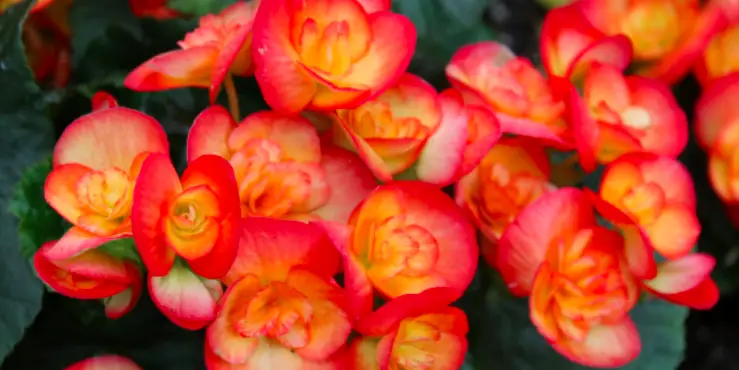
Begonias are a popular garden flower. They come in a variety of shapes and colors, making them a versatile addition to any garden. But are begonias perennials or annuals?
This is a question that many gardeners ask themselves when they are planning their gardens. In this blog post, we will explore the answer to this question and provide some tips on how to care for begonias.
Do Begonias Come Back Every Year?
Depending on the cultivar, begonias may be annual or perennial. While rooted begonias are grown as annuals, tuberous begonias are perennial and will flourish the following spring.
I will now talk about each type of begonia in more detail.
Tuberous Begonias
Tuberous begonias are the most popular type of begonia. They have large, showy flowers that come in a variety of colors. Tuberous begonias are also easy to care for and can be grown in both sun and shade.
You can overwinter tuberous begonias, and then replant them in the spring. To do this, dig up the tubers before the first frost and store them in a dry place that receives lots of sunlight.
Once fully dry, store the tubers in a cool, dark place, such as a basement or garage. Be sure to check on the tubers periodically throughout the winter and water them if they start to shrivel.
In the spring, replant the tubers in pots or in your garden. Be sure to wait until after the last frost before replanting them outside. Just make sure the plants are protected from the cold weather, as they are not frost-tolerant.
Rooted Begonias
Rooted begonias are grown as annuals and will not survive overwintering. In fact, gardeners grow them as annual border plants or bedding plants.
Rooted begonias are easy to care for and come in a variety of colors and shapes. They can be grown in both sun and shade, but they prefer partial sun.
However, rooted begonias are sensitive plants that won’t survive a hard frost. So, if you live in an area with cold winters, you’ll need to bring your plants indoors before the first frost if you want them to survive a bit longer.
It’s a good idea to get your rooted begonias acclimatized to the indoors gradually. Start by bringing the plant in during the night and then bringing it back outside during the day. After a week or two, you can leave the plant indoors permanently.
This sounds easy, but there’s a reason why gardeners treated rooted begonias as annuals. They’re not the easiest plant to care for indoors, and they often don’t make it through the winter.
So, if you’re thinking about growing rooted begonias, be prepared to replant them every year.
Conclusion
In conclusion, begonias can be either annual or perennial, depending on the cultivar. Tuberous begonias are the most popular type of begonia and they are easy to care for. Rooted begonias, on the other hand, are more sensitive and difficult to care for indoors.
If you’re thinking about growing begonias, be sure to choose the right type for your climate and gardening style. And, be prepared to replant annual begonias every year.
Do you have any tips on how to care for begonias? Share them in the comments below. Until next time, happy gardening!
Lantana is a beautiful flowering plant that can be found in many gardens, but some people are concerned that deer may eat it. In this blog post, we will answer the question of whether or not deer eat lantana, and we will also provide some tips on how to protect your plants from deer damage.
Do Deer Eat Lantana?
No, deer do not eat lantana due to the strong smell and rough texture of the plant. In fact, lantana is actually poisonous to deer, so they will avoid it if they can. However, if the deer is starved or desperate, it may eat lantana as a last resort.
Deer will not come to your garden to eat lantana, but they may damage the plant if they accidentally brush up against it while they are feeding on other plants. If you have a problem with deer in your garden, you can try using a deer-resistant fence or spray to keep them out.
How to Protect Lantana from Deer?
While deer won’t eat lantana, they may accidentally trample or damage the plant. If you are concerned about deer damaging your lantana, you can take some steps to protect it:
1. Fencing
One way to keep deer out of your garden is to erect a fence around it. Deer fences should be at least eight feet tall in order to be effective.
You can use a number of different materials to build a deer fence, but make sure that the fence is strong and well-built. Deer are strong animals and they will try to push through or jump over a weak fence.
Some people choose to use electric fences to keep deer out of their gardens. While electric fences can be effective, they require regular maintenance and they can be dangerous for children and pets.
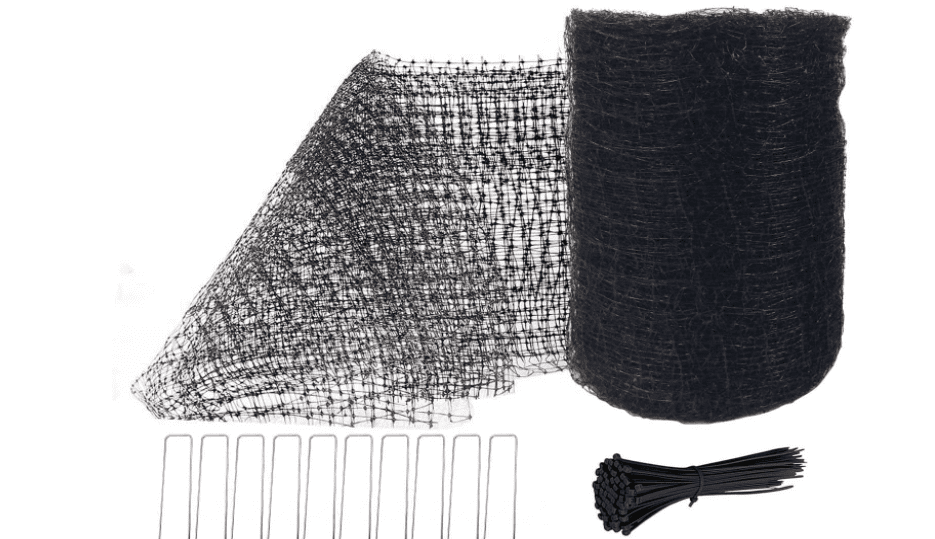
I recommend this netting from Amazon as an effective and affordable way to keep deer out of your garden.
Deer fencing
2. Keep Plants High
If you have lantana growing in pots, you can keep them out of reach of deer by placing them on a high shelf or table.
You can also grow lantana on a trellis or in hanging baskets to keep them out of reach of deer. Deer are not able to jump very high, so keeping your plants off the ground will deter them from eating them.
3. Deer Repellents
There are a number of different deer repellents on the market that you can use to keep deer away from your plants.
Repellents work by emitting a strong smell or taste that deer find unpleasant. The scent of the repellent will deter deer from entering your garden.
You can find deer repellents at most home and garden stores. I recommend this deer repellent from Amazon.
4. Sprinklers
Lastly, you can deter deer from entering your garden by installing a sprinkler system.
When the sprinklers are activated, the noise and movement will scare deer away. In fact, deers dislike falling water so much that they will avoid areas where sprinklers are present. Plus, this will give your plants a much-needed drink of water!
Can Lantana Be Used as Deer-Resistant Fencing?
Yes, lantana can be used as deer-resistant fencing. The strong smell of the plant will deter deer from entering your garden, and the thorns on the stems will also help to keep them out.
However, many lantana varieties are not tall enough, so you may need to plant them in pots or grow them on a trellis in order to create an effective deer fence.
There are tall varieties, like the Lantana involucrata and Lantana camera, which can reach heights of six feet or more. These varieties of lantana are ideal for creating a deer-resistant fence.
Conclusion
In conclusion, it’s unlikely for deer to enter your garden and eat lantana on purpose. However, they may damage the plant if they accidentally brush up against it while feeding on other plants.
If you’re concerned about deer damaging your lantana, you can take some steps to protect it, such as fencing, using repellents, or growing it in a pot. You can also use lantana as deer-resistant fencing.
Do you have any tips for keeping deer out of your garden? Let us know in the comments below! Thanks for reading!
Do deer eat coleus? This is a question that many gardeners have. Coleus is a popular ornamental plant that is often grown in gardens and flower beds. Deer are known to be herbivores, so it makes sense that they would eat plants like coleus. But is this actually the case? Let’s find out…
Do Deer Eat Coleus?
Coleus plants are not a preferred food choice for deer, but they will eat them if they are hungry and there is nothing else to eat. Deer tend to prefer plants that are high in sugar or starch, such as clover, grasses, and fruits.
It’s unlikely for a deer to come to your garden just to eat your coleus plants. However, if you have a lot of deer in your area, they may munch on your coleus plants if they are hungry enough.
If you have a coleus plant in your garden and you are concerned about deer eating it, you can take some steps to protect it. We will discuss some of these steps in this blog post.
How to Protect Coleus from Deer?
To really deter deer from eating your coleus plants, you will need to take some proactive steps:
1. Fencing
The first step you can take to protect your coleus plants from deer is to put up a fence around your garden. This will keep deer out of your garden and away from your plants.
There are many different types of fences that you can use, so you will need to choose the one that is right for you and your garden. A wire fence is a good option, as it is relatively inexpensive and easy to install. I like this netting from Amazon.
You can also use a plastic or mesh fence. These types of fences are not as strong as wire fences, but they will still keep deer out of your garden. There are also deer-resistant plants that you can grow around the perimeter of your garden to help keep deer away.
Deer-resistant fencing
2. Hanging Baskets
You could also try hanging baskets to keep deer away from your coleus plants. This is a good option if you have a small garden or if you don’t want to put up a fence.
To hang a basket, you will need to purchase a hanging basket and some wire. You will also need to find a place to hang the basket. A tree branch or a fence post will work well.
Now, deer won’t be able to reach your coleus plants if they are in a hanging basket. This is a good way to protect your plants from deer, while still being able to enjoy them in your garden.
3. Deer Repellents
Another option you have is to use deer repellents. There are many different types of deer repellents on the market, so you will need to choose one that is right for you. Some deer repellents are made with natural ingredients, while others are made with chemicals.
You can also make your own deer repellent at home. There are many recipes available online. You will need to reapply the repellent regularly, as it will wear off over time.
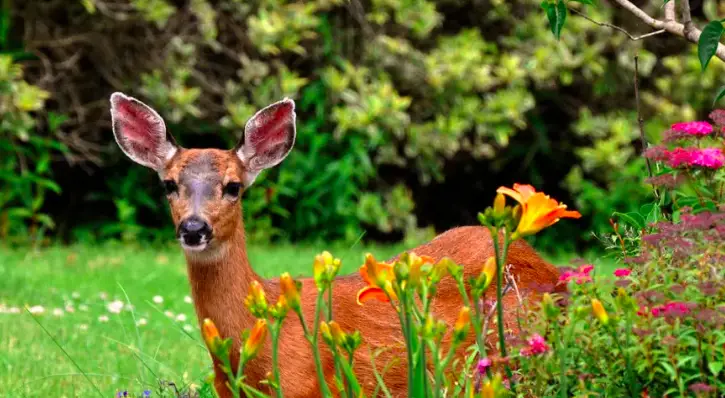
Deer attracted to garden flowers
4. Sprinklers
Another option you have is to use sprinklers. Deer don’t like to get wet, so they will stay away from your garden if they can see water raining down in the area.
You can use a standard sprinkler system or you can install a motion-activated sprinkler. These types of sprinklers will turn on when they detect movement, so they are a good way to keep deer away from your garden.
Can Coleus Be Used as Deer-Resistant Fencing?
No, coleus plants cannot be used as deer-resistant fencing for two reasons.
First, coleus plants are not very dense, so deer can easily push through them. Deers are strong animals and they can easily damage or destroy a coleus plant.
Second, coleus plants could be eaten by deer if the animal is hungry. This is the opposite of what you want in a deer-resistant fence.
Conclusion
In conclusion, you should not rely on coleus plants to keep deer away from your garden. While they may deter some deer, they are not a reliable form of protection. If you are concerned about deer eating your coleus plants, you should take some steps to protect them.
Fencing, deer repellents, hanging baskets, and sprinklers are all good options. You will need to choose the one that is right for you and your garden. With a little effort, you can keep deer away from your coleus plants and enjoy them in your garden.
Do you have a problem with deer eating your coleus plants? What steps have you taken to protect them? Let us know in the comments below.