If you are a gardener, then you know that cucumber plants can be quite sensitive to cold weather. In fact, if the temperature gets too low, it can kill the plants. So, how cold can cucumber plants tolerate before they start to experience damage? In this blog post, we will explore the answer to that question!
How Cold Can Cucumber Plants Tolerate?
Cucumber plants can not tolerate temperatures below 32 degrees Fahrenheit (0 degrees Celsius). In fact, any frost will kill cucumber plants. When temperatures go below 50 degrees Fahrenheit (10 degrees Celsius), the cucumbers will not develop properly and may even go dormant.
If you want to germinate your cucumber seeds, then the weather must be higher than 60 degrees Fahrenheit (15.6 degrees Celsius). This means that you should not plant your cucumber seeds until the weather has warmed up enough.
In fact, Penn State University conducted research on how low temperatures can affect cucumber plants. They found that when the temperature gets below 50 degrees Fahrenheit (10 degrees Celsius), the growth of cucumber plants is drastically affected.
So, it is essential to keep cucumber plants warm if you want them to produce fruit!
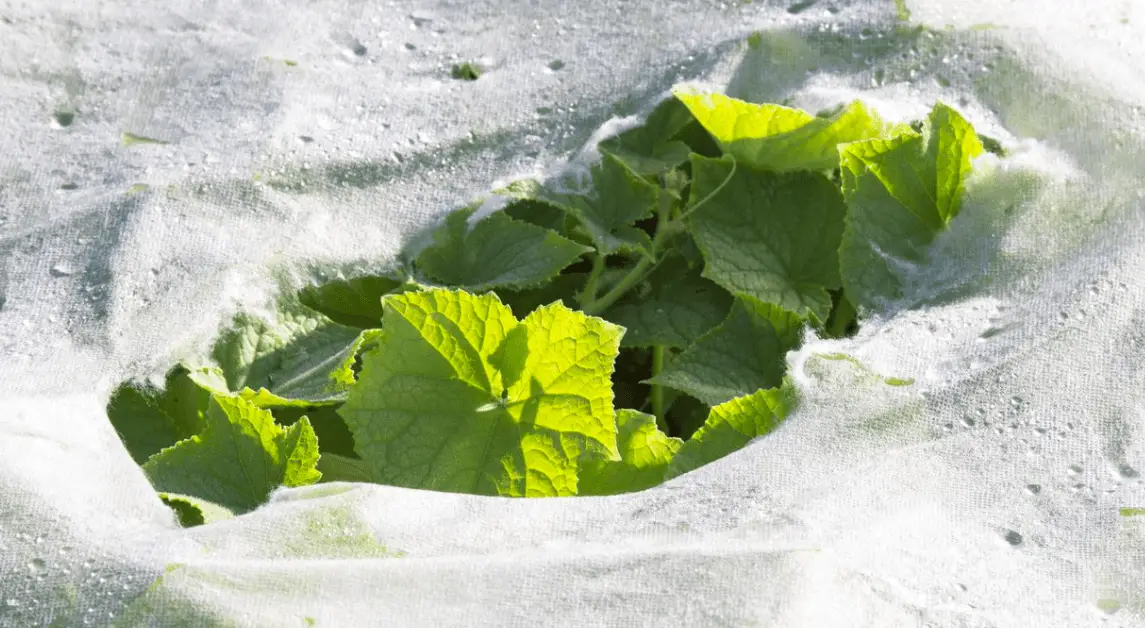
If you are growing cucumbers in a cold climate, you will need to take extra steps to protect your plants. You can use row covers or hot caps to keep the plants warm. You may also need to provide some artificial heat, such as with a heat lamp, but be careful not to burn the cucumber leaves.
How to Protect Cucumber Plants in Cold Weather?
Let’s go over what you need to do if you want to grow cucumbers in a cold climate:
1. Avoid open areas
It’s best to find areas of your garden that are sheltered from the wind and other elements. This means that you should aim to plant your cucumber plants along fences, walls, or other structures.
These areas will be slightly warmer than open areas, and every little bit helps when it comes to protecting cucumber plants in winter! In addition, look for areas that receive the most amount of sunlight.
2. Watch the weather forecast
It’s a good idea to keep an eye on the weather forecast. If a cold snap is expected, then you can take steps to protect your cucumber plants. This may include bringing them indoors or covering them with row covers or hot caps.
3. Grow seedlings indoors
If you want to get a head start on the growing season, then you can grow your cucumber seedlings indoors. This way, they will be protected from the cold weather and can be transplanted into the garden when the weather has warmed up.
4. Use cold frames for seedlings
A cold frame is a small structure that you can use to protect your cucumber seedlings. It is basically a box with a clear lid that allows sunlight to reach the plants inside.
You can think of these cold frames as mini-greenhouses. They will help to keep your cucumber seedlings warm and allow them to grow properly. Cold frames even have smart functionality, as they can open and close automatically to regulate the temperature inside!
5. Use cloches for young cucumber plants
A cloche is a small, clear cover that you can place over young cucumber plants. These covers will help to protect the plants from frost and other elements. The top of the cloche can be opened on warmer days to allow ventilation.
Cloches are also effective at keeping pests away from your cucumber plants. So, if you are worried about critters eating your plants, then using cloches is a great way to keep them at bay.
6. Use row covers for mature cucumber plants
Row covers are pieces of fabric that you can lay over your cucumber plants. They will help to trap heat and protect the plants from frost damage. Be sure to use a lightweight row cover so that the plants can still receive sunlight and air circulation.
7. Construct a greenhouse
If you’re serious about growing cucumbers in a cold climate, then you may want to consider constructing a greenhouse. This will provide the ultimate level of protection for your plants and ensure that they have everything they need to thrive. They are also great for protecting your cucumbers from receiving too much water during winter floods.
Of course, greenhouses can be expensive and require a lot of work to set up. But, if you’re committed to growing cucumbers in a cold climate, then it may be worth the investment.
Cold Tolerant Cucumber Varieties
There are a small number of cucumber varieties that are more tolerant to cold weather. These varieties include:
Corinto – This is an F1 Hybrid cucumber that is very tolerant to cold weather and powdery mildew. The cucumber fruit typically measures 8″ in length, with a dark green covering that is nearly black in color. It matures in 48 days
Socrates –Similar to the Corinto cucumber, this variety is also tolerant to cold weather and powdery mildew. The cucumbers typically measure about 7″ in length and have dark green skin. They mature in 52 days
Wisconsin –This is a pickling cucumber that has been grown in cold climates for many years. Resistant to disease, these cucumbers take 65 days to reach full maturity
Conclusion
In conclusion, cucumber plants can tolerate cold temperatures if they are protected properly. If you live in a cold climate, then you will need to take extra steps to ensure that your plants are safe from the elements.
If your cucumber plants are exposed to temperatures close to freezing, then they may suffer from frost damage, like cucumber leaf holes, and not survive. This is why it’s important to take measures to protect them, such as by using row covers or constructing a greenhouse.
By following these tips, you can successfully grow cucumber plants in a cold climate. Just be sure to stay vigilant and take the necessary precautions to keep your plants safe!
Plants take in carbon dioxide and release oxygen gas as part of photosynthesis. The process by which they do this is fascinating, and scientists are still working to understand all the intricacies involved.
In this blog post, we will explore where carbon dioxide enters the plant and how it is transported throughout the organism. We will also discuss what happens to the carbon dioxide once it is inside the plant. Stay tuned for an interesting look at one of nature’s most important processes!
Where Does Carbon Dioxide Enter the Plant?
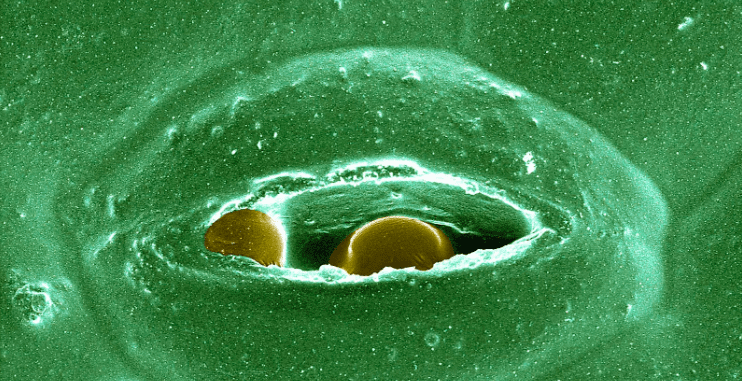
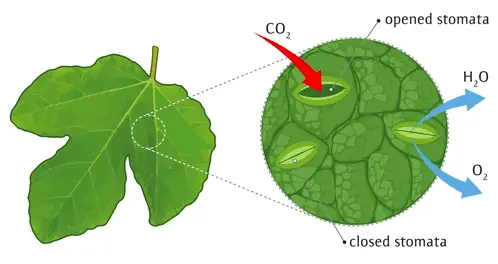
Carbon dioxide enters the plant through tiny pores called stomata (singular: stoma). Stomata are found on the leaves and other parts of the plant that are exposed to the air. Each stoma is surrounded by two guard cells.
When the guard cells take in water, they swell and cause the stoma to open. This allows carbon dioxide and other gases to enter the plant. The stoma will close when the guard cells lose water.
The stomata are important for gas exchange, but they also help regulate water loss from the plant. By opening and closing, as needed, the stomata can help the plant conserve water on hot days or when the soil is dry.
What Happens to Carbon Dioxide Once It’s Inside the Plant?
Once carbon dioxide enters the plant, it diffuses throughout the cells. The process of diffusion is how molecules move from an area of high concentration to an area of low concentration.
So, in this case, the carbon dioxide molecules will spread out from the stoma until they are evenly distributed throughout the plant cells.
From there, the carbon dioxide molecules are used in photosynthesis to make glucose (sugar). The plant uses glucose for energy and to build other molecules that it needs to grow and survive.
The leftover oxygen gas is released back into the atmosphere through the stomata. And so the cycle begins anew!
Where Does Carbon Dioxide Enter a Tree?
Just like with plants, carbon dioxide enters a tree through tiny pores called stomata. Stomata are found on the leaves and other parts of the tree that are exposed to the air. Each stoma is surrounded by two guard cells.
By taking in carbon dioxide, the tree can use the process of photosynthesis to make its own food! The only other requirements are water (from the roots) and sunlight (from the leaves).
Conclusion
In conclusion, plants take in carbon dioxide and release oxygen gas as part of photosynthesis. The process by which they do this is fascinating, and scientists are still working to understand all the intricacies involved.
In this blog post, we explored where carbon dioxide enters the plant and how it is transported throughout the organism. We also discussed what happens to carbon dioxide once it is inside the plant.
If you have any questions or comments, please let us know! We hope you enjoyed this quick exploration of carbon dioxide and plants. Stay tuned for more posts on photosynthesis and other plant processes. Thanks for reading!
Tomato feed is a popular plant food that is used to help improve the growth and health of tomatoes. But can you use it on other plants? The answer may surprise you! In this blog post, we will discuss the benefits of tomato feed and whether or not you can use it on other plants. We will also provide some tips on how to use tomato feed effectively!
Can You Use Tomato Feed On Other Plants?
Yes, you can use tomato feed on all plants, including vegetables, fruits, and ornamentals. The tomato feed contains high levels of nitrogen, phosphorus, and potassium, which are essential nutrients for plant growth. Tomato feed can also help improve the taste of fruits and vegetables.
So even though it’s labeled for tomatoes, feel free to give your other plants a little taste of this yummy food! It is merely called this for marketing reasons. The chemical and/or organic nutrients work equally well for all plants.
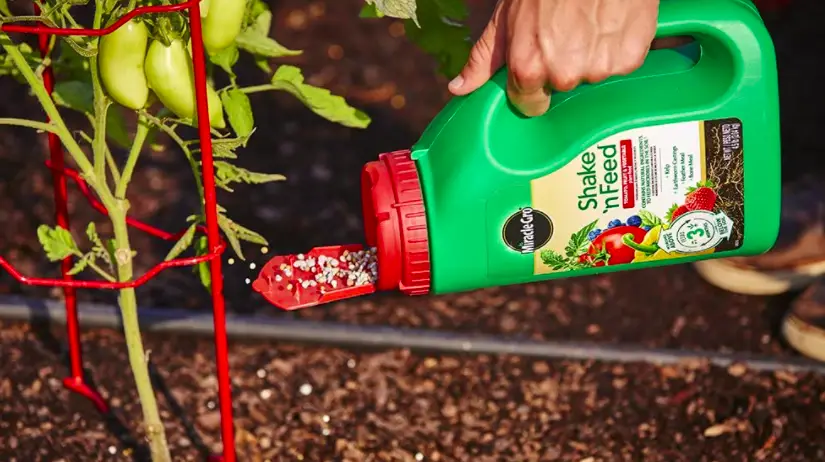
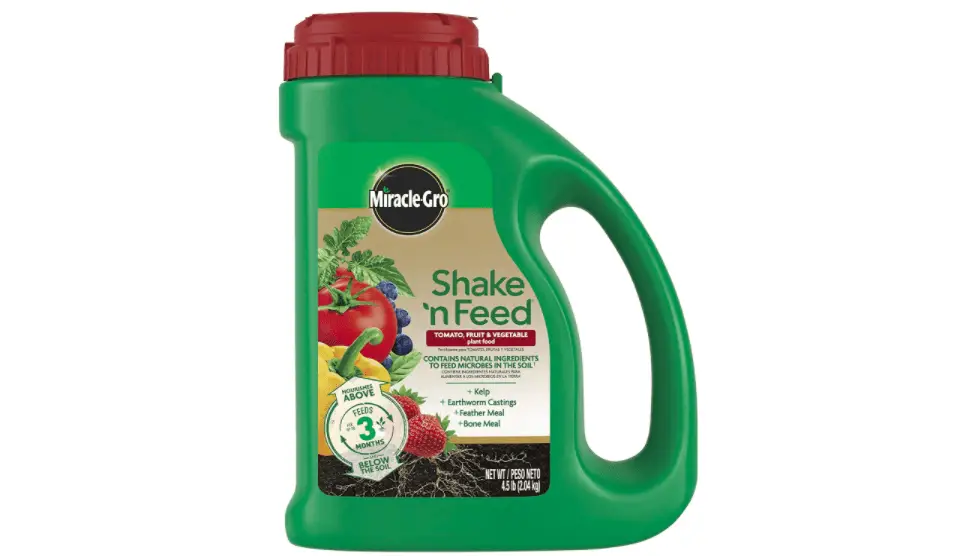
I like using Miracle-Gro Shake N Feed and have got great results using it on pretty much all of my plants, especially those in the garden.
What is the Purpose of Tomato Feed?
Tomato feed is used to help improve the yield, quality, and taste of tomatoes. It can also help improve the growth and health of other plants. Tomato feed is a popular plant food because it is an all-purpose fertilizer that contains high levels of nitrogen, phosphorus, and potassium.
Compared with other fertilizers, tomato feed tends to contain more potassium, which is essential for plant growth. Potassium helps plants to develop strong roots, stems, and leaves. It also helps plants to produce more fruit and flowers.
How Does Tomato Feed Work on Other Plants?
Tomato feed is rich in nutrients and minerals that are essential for plant growth. It also contains a high level of nitrogen, which is necessary for the production of chlorophyll. Chlorophyll is responsible for the green color of plants and helps them to convert sunlight into energy.
In addition to its nitrogen content, tomato feed also contains phosphorus, potassium, and calcium. These nutrients are essential for plant growth and health. Phosphorus helps plants to produce flowers and fruit, while potassium aids in the development of strong roots and stems. Calcium helps to prevent blossom-end rot, a common problem in tomatoes.
When using tomato feed on other plants, it is important to follow the directions on the package. Tomato feed should be applied at the rate of one tablespoon per gallon of water. It is also important to apply tomato feed to damp soil, as this will help the nutrients to be absorbed more easily.
Can I Use Tomorite to Feed Other Plants?
Yes, you can use Tomorite to feed other plants. Tomorite is a popular plant food that is used to help improve the growth and health of tomatoes. It can also be used on other plants, including vegetables, fruits, and ornamentals.
Tomorite contains high levels of nitrogen, phosphorus, and potassium, which are essential nutrients for plants. Use it at the recommended rate of 20ml / 5L of water. This will help ensure that your plants get the nutrients they need without being overfed.
Can I Use Miracle-Gro Tomato Plant Food to Feed Other Plants?
Yes, you can use Miracle-Gro Tomato Plant Food to feed other plants. Miracle-Gro Tomato Plant Food is an all-purpose fertilizer that can be used on vegetables, fruits, and ornamentals.
In fact, I use this or the Miracle-Gro Shake ‘N Feed for all my plants, both indoors and out. I’ve had great results with it, so I would definitely recommend it!
Can You Use Tomato Feed On Roses?
Yes, you can use tomato feed on roses. Tomato feed is great for roses because it contains high levels of nitrogen, phosphorus, and potassium. Roses love potassium, so using tomato feed, which is high in potassium, is a great way to give them a little boost.
Just be sure to follow the directions on the package and apply it at the recommended rate. Applying too much tomato feed, especially nitrogen, can actually damage roses, so it’s important to be careful. You can read my full article on tomato feed and roses here.
Conclusion
As you can see, tomato feed is a versatile and beneficial plant food that can be used on a variety of plants. So don’t hesitate to give it a try on your next gardening project! By following the directions and using it properly, you can ensure that your plants will get the nutrients they need to thrive.
Have you ever tried using tomato feed on other plants? What were your results? Let us know in the comments below! And be sure to check out our other blog posts for more gardening tips and tricks. Happy gardening!
It can be a little nerve-wracking when you go to plant your potatoes and they have not yet sprouted. You may be wondering if you can still plant them and if they will grow. In this blog post, we will discuss the best way to plant potatoes that have not yet sprouted, as well as what you can do to help them along.
Can You Plant Potatoes without Eyes?
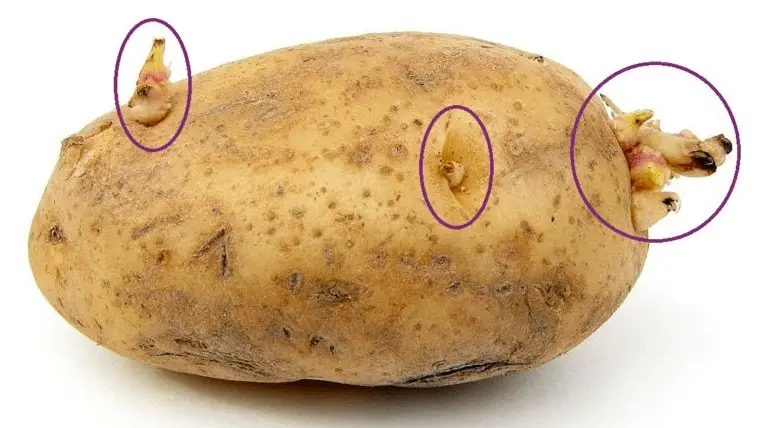
No, you cannot plant potatoes without eyes. The eyes are where the potato plants will sprout from, so if your potatoes do not have any eyes, they will not be able to sprout and grow.
Now, there is a chance that your potatoes without eyes will grow, but it’s not very likely. It’s best to plant potatoes that have at least a few eyes so that you can be sure that they will grow into healthy plants.
Why You Should Wait for Potatoes to Sprout
There are a few reasons why you should wait for your potatoes to sprout before planting them. Let’s cover the most important ones:
1) Strong root system
The potatoes need to sprout so that they can develop a strong root system. This is important because the roots are what will anchor the potato plant in the ground and help it to absorb nutrients and water.
If you plant a potato that has not yet sprouted, it will not have a strong root system and may not be able to properly anchor itself in the ground. This can lead to problems like the plant toppling over in heavy winds or being pulled out of the ground by animals.
2) Divide potatoes
As long as a piece of potato has at least two eyes, you can cut it in half and plant both pieces. This is a great way to get more plants from a single potato, and it also helps to ensure that each plant has a strong root system.
If you try to divide a potato that has no eyes, you won’t know where to cut it and you may end up with two small pieces that will not be able to grow into healthy plants.
3) ick the best potatoes
Some potatoes sprout more aggressively than others, and you want to make sure that you are planting the best potatoes. The best way to do this is to wait for them to sprout so that you can see which ones are growing the strongest.
If you plant a potato without waiting for it to sprout, you won’t be able to tell how well it will grow. This could lead to problems later on, so it’s best to just wait and pick the best potatoes for planting.
How Do I Get My Potatoes to Grow Eyes?
The key is to stop the potatoes from going dormant. You see, we keep potatoes in storage so that they don’t sprout and start growing. But, in order for them to sprout, we need to give them the right conditions.
Light – Potatoes need light in order to sprout, so make sure that they are in a well-lit location. A windowsill is a great spot for them.
Temperature – The ideal temperature for potato sprouting is around 70 degrees Fahrenheit.
Water – Keep the potatoes moist, but not wet. You can do this by misting them with water or placing them in a bowl of water so that they can soak up moisture from the air.
Once you have provided the potatoes with the right conditions, it’s just a matter of waiting for them to sprout. It can take anywhere from a few days to a couple of weeks for the potatoes to grow eyes and start sprouting.
Another good tip is to lay the potatoes on a bed of moist soil. This is a great environment for them to sprout in and will give them the nutrients they need to grow.
How Many Potatoes Grow From One Eye?
You can expect each potato eye to give 1-2lbs of potatoes. So, if you want to harvest a lot of potatoes, you’ll need to start with a lot of eyes.
This is one of the benefits of waiting for your potatoes to sprout before planting them. If you plant them without eyes, you won’t know how many potatoes you’ll get from each one.
The total harvest depends on the type of potato, the size of the potato, and the conditions in which it was grown. So, there is no exact answer to this question.
Remember to plant the potatoes with the eye facing upwards towards the sky. This will help the potato to sprout more easily and produce more potatoes.
Conclusion
In conclusion, you should only plant potatoes that have eyes. This will give them a strong root system, and it will also allow you to pick the best potatoes for planting. It’s also a good idea to lay the potatoes on a bed of moist soil so that they can sprout more easily. Thanks for reading!
Do you have a Monstera deliciosa plant in your garden and are wondering if your rabbits can eat it? Wonder no more! In this blog post, we will answer the question of whether or not rabbits can eat Monstera deliciosa. Let’s find out…
Can Rabbits Eat Monstera Deliciosa?
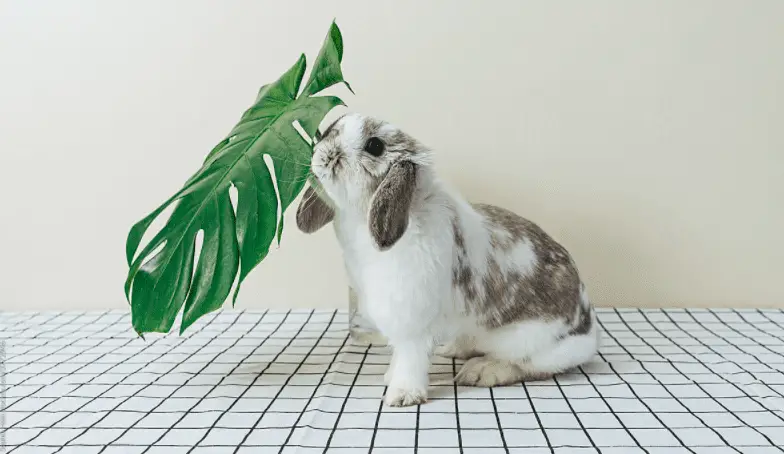
No, rabbits cannot eat Monstera deliciosa. This plant is poisonous to rabbits and can cause serious health problems if ingested. If you have this plant in your garden, make sure to keep your rabbits away from it.
Monstera plants contain calcium oxalates, which can cause gastrointestinal issues for your rabbits, manifesting as unpleasant symptoms like diarrhea. In severe cases where a large amount of the plant is eaten, it can even lead to death.
This is a serious issue as rabbits will actively seek out plants to eat and may not be able to tell the difference between a Monstera deliciosa and other, non-poisonous plants.
What to Do If My Rabbit Ate Monstera Plant?
If your rabbit has ingested any part of the Monstera plant, it is important to seek veterinary care immediately. The sooner you can get your rabbit to the vet, the better their chances are of making a full recovery.
Keep watching your rabbit for signs of illness, such as vomiting, drooling, or diarrhea, and contact your vet if you notice any changes in their health. The signs usually appear within the first few hours after ingestion, which shows how quickly this plant can affect rabbits.
At the vet, they will likely give your rabbit IV fluids and monitor them closely for any other health issues. If your rabbit is showing any signs of distress, the vet may also give them pain medication.
The good news is that many rabbits who have eaten Monstera plants make a full recovery with proper medical care. However, it is important to be aware of the dangers of this plant and keep your rabbits safe.
How to Prevent Your Rabbit From Eating Monstera Deliciosa?
There are a few things you can do to keep your rabbit from consuming monstera leaves.
1. Out of reach
The easiest way to prevent your rabbit from eating Monstera leaves is to keep the plant out of reach. If you have the plant in your house, make sure it is not within your rabbit’s reach.
You can also put the plant in a room that your rabbit does not have access to. This will ensure they cannot get to the plant even if they are curious.
2. Cover the plant
Another way to keep your rabbit from eating Monstera leaves is to cover the plant. You can use a net or cloth to cover the plant so your rabbit cannot get to the leaves. This is a good option if you cannot keep the plant out of reach.
Just make sure the cloth or netting is secure so your rabbit cannot pull it off and get to the plant. Covering the plant is also a good way to protect other animals and small children from eating the leaves.
3. Repellent spray
A repellent spray can also help keep your rabbit away from the plant. There are many different repellents on the market that you can use.
Just make sure to choose a safe option that will not harm your rabbit if they ingest it. You can also make your own repellent by mixing water and vinegar. Spray the mixture on the leaves of the plant and it will help keep your rabbit away.
Conclusion
In conclusion, rabbits cannot eat Monstera deliciosa. It’s best to keep this plant out of reach or cover it up if you have it in your house. If your rabbit does ingest the plant, seek veterinary care immediately.
I hope this blog post has helped answer your question and keeps your rabbit safe from this plant. Not only will your plants stay healthy, but your rabbit will too! Thanks for reading.