by Gardener Tim | May 18, 2022 | Facts
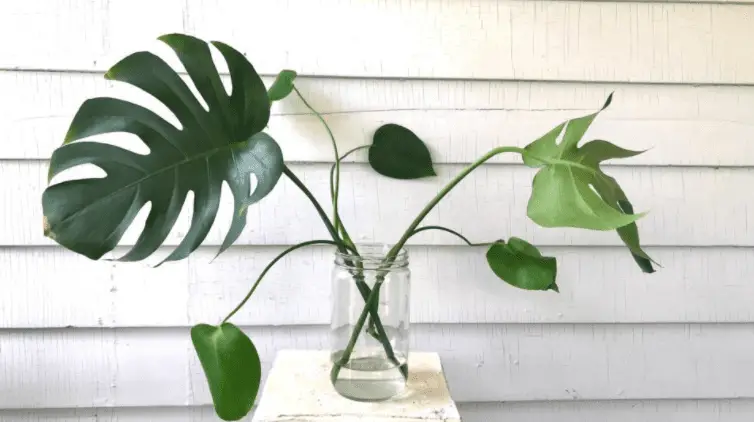
If you are like me, you love monstera leaves. They are so unique and beautiful! But have you ever wondered how long they last when cut? And what about keeping them in water? In this blog post, we will answer those questions and more!
How Long Do Cut Monstera Leaves Last?
You can expect cut monstera leaves to last anywhere from a few days to a couple of weeks. It really depends on how you take care of them. If you keep the stems in water, they will last longer. But if you let them dry out, they will not last as long.
This means that cutting a monstera leaf is not a long-term solution if you want to keep the plant alive. However, it can be a good way to enjoy the plant for a short period of time. Many people do this when monstera stems break from the weight of the leaves.
If the monstera leaf has a node, you can propagate it in water. A node is a small growth on the stem where new leaves and stems grow. By placing the node in water, you can encourage it to sprout new growth.
As such, if you want to keep your cut monstera leaf alive for the long-term, it is best to make sure there’s a node attached and place it in water.
What is the Best Way to Store Cut Monstera Leaves?
If you want your cut monstera leaves to last as long as possible, it is best to store them in water. You can use a vase or a jar. Just make sure that the stems are submerged in water.
This is because monstera leaves need water to stay alive. When they are cut, they no longer have access to the water that they need. Storing them in water will help to keep them alive for a longer period of time.
Just like with your full plant, keep the vase in a spot with bright, indirect light. Too much direct sunlight will cause the leaves to turn yellow and eventually die.
Additionally, you should change the water every few days to prevent it from getting stagnant. Not changing the water will result in moldy liquid and a shortened lifespan for your leaves.
How to Cut Monstera Leaves?
When cutting monstera leaves, it is important to use a sharp knife. This will help to prevent the stems from breaking. You should also cut at an angle so that more of the stem is exposed. This will help the plant to absorb more water and stay alive for a longer period of time.
Make sure all equipment is sterilized before use to prevent the spread of disease. Simply wipe down knives and cutting tools with rubbing alcohol to disinfect them.
It’s also important to be careful when cutting monstera leaves. The plant is poisonous if ingested, so be sure to wash your hands after cutting the leaves.
Conclusion
In conclusion, cut monstera leaves can last anywhere from a few days to a couple of weeks. The best way to store them is in water, and you should use a sharp knife to cut at an angle when cutting the leaves.
Be sure to sterilize all equipment before use and wash your hands after cutting the leaves. Thanks for reading! I hope this was helpful.
by Gardener Tim | May 18, 2022 | Facts
Have you ever wondered if palm trees are really grass? It’s a valid question, considering how different they look from other types of trees. In this blog post, we will explore the answer to that question and learn more about these unique plants!
Are Palm Trees Actually Grass?
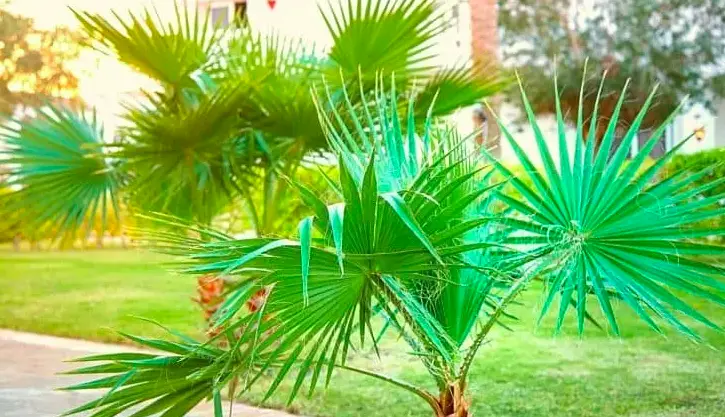
Yes, palm trees are classified as grass. In fact, palm trees have very little in common with trees. For example, palm trees don’t have bark or a trunk like most trees. Palm trees also don’t go through the second stage of growth like other trees.
Technically speaking, palm trees are monocots, just like grass. This means that they have one seed leaf or cotyledon. While grass is from the Poaceae family, palm trees are from the Arecaceae family.
There are many differences between palm trees and actual trees. Let’s explore some of them right now!
1) Genetics
Looking at the DNA of a palm tree will reveal that it is more closely related to grass than it is to trees. This is because palm trees share a lot of the same genetic characteristics as grass.
For example, palm trees have a shorter life span, they produce flowers, and their leaves are generally much narrower and fewer than those of trees. All of these characteristics are more commonly found in grasses than in trees.
2) No trunk
One of the most obvious differences between palm trees and other trees is that palm trees don’t have a trunk. Instead, they have a stem that grows directly from the ground.
The lack of a trunk makes palm trees much less stable than other types of trees. This is why you often see palm trees leaning to one side or even falling over in strong winds.
Did you know that trees grow in an outward fashion? This is why you can cut a tree and see cambium rings, which reveal how old the tree is. Palm trees, on the other hand, do not have this growth pattern.
3) Different roots
Another difference between palm trees and other trees is their roots. Palm trees have what are called fibrous roots, which are thin and spread out horizontally. This type of root system is very different from the deep, thick roots that most trees have.
4) Flexible
You may have seen palm trees bending in the wind and thought that they were about to break. However, this is not the case! Palm trees are actually very flexible, which helps them survive in hurricane-prone areas.
This flexibility is also why palm trees are often used as decorations in homes and businesses. They can be bent into all sorts of shapes without breaking! However, the shallow roots of palm trees do make them susceptible to being uprooted in strong winds.
Compare this to the trunk of a tree, which is much more rigid. The trunk of a tree cannot bend without breaking, which makes them more likely to fall over in high winds.
5) No secondary growth period
The cells of a tree die and are replaced on a regular basis. This process is known as secondary growth and it helps trees to grow taller and wider over time. Palm trees, on the other hand, do not undergo this secondary growth period. Palm tree cells just get older and older until they die, which could be hundreds of years!
6) Weaker than trees
Trees are magical creatures that are able to heal themselves! For example, if a branch becomes infected, the tree will seal off that branch in order to prevent the infection from spreading.
Palm trees, however, are not able to heal themselves in this way. This means that if a palm tree becomes infected, the entire tree is at risk of dying.
Do Palm Trees Have Bark?
No, palm trees do not have bark. The trunk of a palm tree, which is actually a stem, is covered in hardened cells from fonds. Fonds are the leaves of a palm tree.
The trunk of a palm tree is also much smoother than the trunk of a tree. This is because there are no branches growing out from the trunk. The only thing you’ll find on a palm tree trunk is the remains of old leaves!
The lack of bark makes palm trees more susceptible to fire than other types of trees. This is because the bark of a tree acts as a barrier, protecting the tree from the heat of a fire.
Do Palm Trees Have Trunks?
No, palm trees do not have trunks. Instead, they have an elongated stem that grows directly from the ground. While similar to a trunk in some ways, the stem of a palm tree is much thinner and less rigid.
The lack of a trunk makes palm trees more flexible than other types of trees. This flexibility is helpful in hurricane-prone areas, as the palm is less likely to snap in high winds.
Do Palm Trees Have Branches?
No, palm trees do not have branches. The leaves of a palm tree grow directly from the stem. There are no side branches growing out from the trunk of a palm tree. This is yet another piece of evidence that palm trees are not actually trees!
Do Palm Trees Have Leaves?
Yes, palm trees do have leaves. In fact, their leaves are one of the most distinctive features of palm trees! Palm tree leaves are large and pinnate, which means that they have a central shaft with smaller leaves growing out from both sides.
Known as fronds, the large leaves of a palm tree are used to capture sunlight, which is then used to produce food for the tree. The leaves of a palm tree also play an important role in the tree’s water balance.
Conclusion
In conclusion, palm trees are more closely related to grass than they are to trees. This is because they share many of the same characteristics, such as a shorter life span, the production of flowers, and narrow leaves.
Palm trees also have some unique characteristics, such as their lack of a trunk and their shallow, fibrous roots. Finally, palm trees are more vulnerable to disease and fire than other types of trees.
by Gardener Tim | May 18, 2022 | How To's, Plant Care
If you’ve ever grown a monstera plant, you know that it can be a little bit unpredictable. One day they might be growing perfectly straight, and the next they might start leaning to one side.
This isn’t usually a cause for alarm, but it can be frustrating if you’re trying to keep your plant looking neat and tidy. In this blog post, we will discuss some tips on how to stop Monstera plants from leaning to one side.
How to Stop Monstera Leaning To One Side?
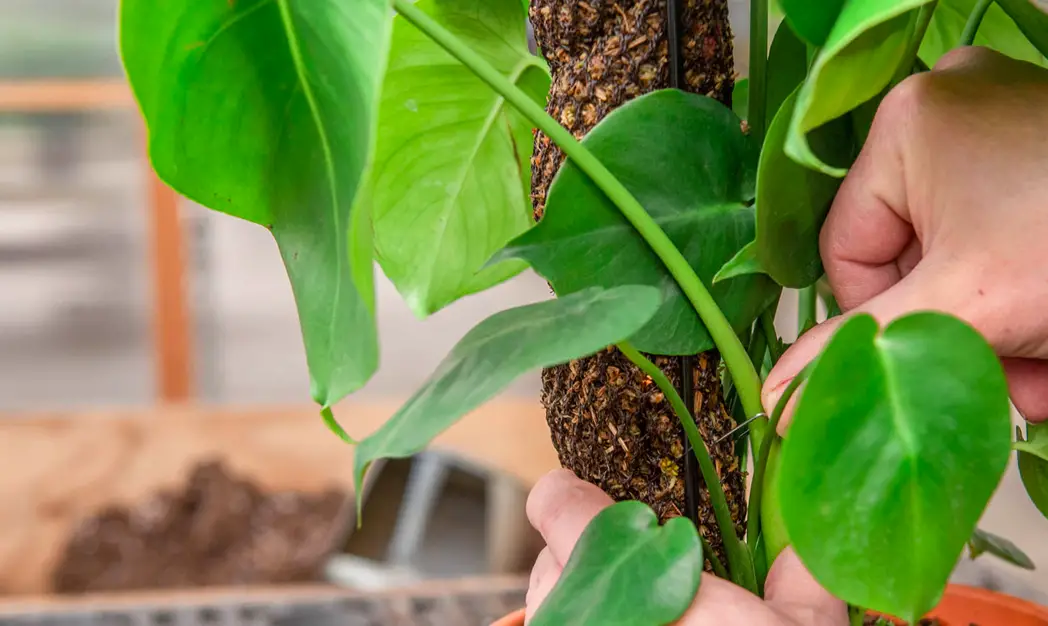
The best way to stop your monstera from leaning to one side is by staking it. You can do this by tying the plant to a moss pole or trellis with some soft ties. Be careful not to tie it too tight, as this could damage the stem.
This will instantly fix the leaning problem and also help the plant to grow taller and fuller. In addition, it will give the plant something to climb, which it loves to do!
The Importance of Keeping a Monstera Upright
It’s important to keep a monstera plant upright for a few reasons.
1. Broken stem
First of all, if the plant starts to lean too much, it could fall over and break the stem. This would cause the plant to stop growing altogether. A broken stem can also be difficult to fix, so it’s best to avoid it if possible.
2. Pests and diseases
Another reason why it’s important to keep your monstera plant upright is that pests and diseases love to attack weak and vulnerable plants. If your plant is leaning to one side, it will be much easier for pests and diseases to get to the stem and leaves.
In fact, it’ll also be harder for all leaves to get the same amount of light if the plant is leaning. This could cause some leaves to turn yellow and eventually die off.
3. Leggy
Another reason it’s important to keep monstera plants upright is because they can start to get leggy. This happens when plants try their hardest to grow towards the light, but they don’t have enough support. As a result, the stems become long and thin, and the leaves are spaced out further apart.
While leggy plants might still be healthy, they don’t look very aesthetically pleasing. So if you want your monstera to look its best, it’s important to keep it upright.
4. More space
Growing vertically means that your plant will have more space to grow. If you let your plant lean to one side, it will start to crowd other plants and could even fall over onto them.
Keep your monstera vertical, and not only will you keep it strong, but you’ll save space in your home too.
The Best Stakes for Leaning Monstera Plants
There are a number of options when it comes to monstera stakes. The most important thing is to choose a stake that is strong enough to support your plant.
1. Moss poles
Moss poles are one of the best options for monstera plants. They are made from natural materials, so they won’t harm your plant, and they are also very strong.
While they have different center materials, the outside is always wrapped in a sphagnum moss that mimics a plant’s natural habitat. This moss provides support nutrients and moisture to the plant as it grows.
Moss poles are also some of the most aesthetically pleasing stakes, so if you’re worried about your plant not looking its best, a moss pole is a great option. They are slightly more expensive than other stakes, but they are definitely worth the investment.
2. Trellis
Another option for monstera plants is a trellis. Trellises allow the plant to grow vertically and horizontally, giving it a lot of support. Plus, they look really great in any home.
When choosing a trellis for your monstera plant, make sure to choose one that is made from strong materials. You don’t want your plant to outgrow the trellis and then start leaning to one side.
3. Garden stake
A garden stake is another option that can be used for monstera plants. Garden stakes are usually made from metal or plastic, and they are very strong and durable. You can find garden stakes at most home improvement stores or online.
When choosing a garden stake, make sure to choose one that is the right size for your plant. You don’t want the stake to be too big or too small. The good news is that you can pick these up for relatively cheap, so they are a great option if you’re on a budget.
4. Coco coir pole
A coco coir pole is another great option for monstera plants. Coco coir poles are made from the fibers of coconut shells, so they are a sustainable option that won’t harm the environment. They are also very strong and durable, making them a great choice for monstera plants.
It provides the same advantages as the moss poles in that it provides a moist and nutrient-rich environment for the plant to grow up in.
5. PVC pipe
A PVC pipe is a great option if you’re looking for a cheap and easy way to support your monstera plant. PVC pipes are very strong and can be cut to any size, so you can easily find one that is the right size for your plant.
You can also use multiple PVC pipes to create a larger support system for your plant. Just make sure to use PVC pipes that are at least a few inches in diameter so it is strong enough to support your plant.
Conclusion
In conclusion, you can stop your monstera plant from leaning to one side by using a stake. The best stakes for monstera plants are moss poles, trellises, garden stakes, coco coir poles, and PVC pipes. Choose the right size stake for your plant and make sure to use multiple if necessary.
I hope you can see the immeasurable benefits of using a stake for your monstera plant. Your plant will be stronger, healthier, and happier, and you’ll have more space in your home too. So what are you waiting for? Get staking!
by Gardener Tim | May 18, 2022 | House Plants
Monsteras are beautiful plants that can be a great addition to any home. They are easy to care for, and with the right care, they can grow to be quite large. One question that many people have about monsteras is whether or not they can become variegated.
In this blog post, we will answer that question and give you some tips on how to achieve a variegated monstera plant. Let’s start!
Can My Monstera Become Variegated?
While it is possible for a monstera to become variegated, the chances of a monstera plant spontaneously developing variegation are incredibly slim. This is because variegation is usually caused by a mutation in the plant’s genes.
The mutation would have to already be present in the plant’s DNA for it to have a chance of becoming variegated. So unless your plant is young and its DNA has not yet been fully formed, it is unlikely that your monstera will become variegated.
How Monstera Plants Become Variegated
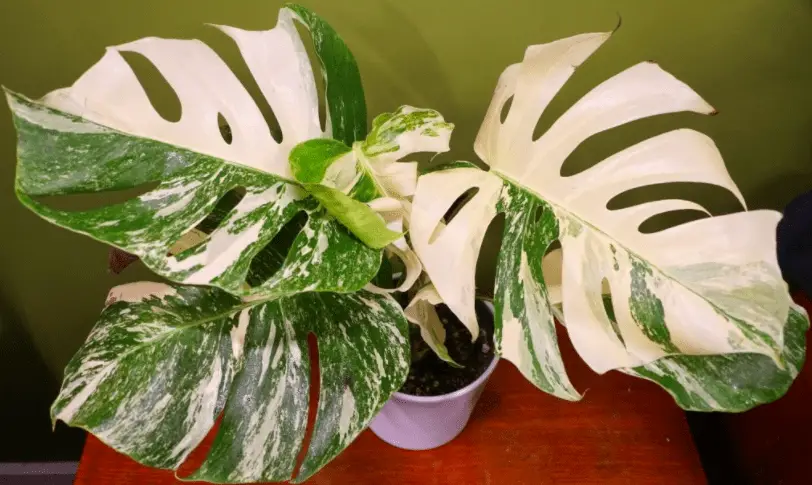
Variegated monstera plants have a genetic mutation that prevents them from producing chlorophyll in some of their cells. This causes the leaves of the plant to have patches of white or yellow where there is no chlorophyll.
While this type of variegation may be considered aesthetically pleasing, it does have some drawbacks. For instance, because the plant isn’t able to produce as much chlorophyll, it isn’t able to capture as much solar energy.
As a result, variegated monsteras tend to grow more slowly than their green counterparts. Nevertheless, these plants can still make impressive houseplants, provided they are given proper care.
How to Get a Variegated Monstera?
While they are sometimes difficult to find, there are a few ways to get your hands on a variegated monstera of your own.
One way is to purchase one from a reputable nursery or online retailer. This option can be rather pricey, but it is the most guaranteed way to get a variegated plant.
Another way to get a variegated monstera is to take cuttings from an already existing plant. This method is cheaper but less guaranteed, as there is no guarantee that the cutting will survive to maturation.
Some people try to grow variegated monstera plants from seed, but this is even less likely to be successful than taking cuttings. In fact, the seeds you see online are usually fake and won’t produce a variegated plant.
So, if you’re looking to add a variegated monstera to your collection, your best bet is to purchase one or take cuttings from an existing plant.
Can Monstera Variegation Be Made Brighter?
It’s possible to brighten up the variegation on a monstera plant by giving it more light. The more light the plant gets, the more pronounced the variegation will be.
If you have a variegated monstera that is looking a bit lackluster, try moving it to a brighter spot in your home. You may also want to consider adding some grow lights to help brighten up the plant’s leaves.
However, too much direct sunlight can scorch the leaves, so it’s important to find a balance. If the plant is placed in an area with bright indirect light, the variegation will become more pronounced over time.
Variegated Monsteras are often more sensitive to changes in their environment than green-leafed varieties. This means that they may lose their variegation brightness if they are moved to a new location or if their care routine is changed. To help keep the variegation looking its best, try to keep the plant in a stable environment.
Conclusion
In conclusion, while it is possible for a monstera to become variegated, the chances of this happening are very slim. If you want to have a variegated monstera plant, your best bet is to buy one that already has the mutation in its DNA.
This mutation can cause the plant to produce less chlorophyll, which in turn results in the distinctive white patches that are characteristic of variegated leaves.
While this mutation is usually passed down through the plant’s genetics, it can also occur spontaneously as the plant grows. Regardless of how it happens, variegation is definitely an eye-catching feature that makes monstera plants truly captivating.
I hope this article was helpful in answering your question. If you have any further questions about monstera plants, feel free to leave a comment below and I will do my best to answer them. Thanks for reading!

by Gardener Tim | May 18, 2022 | House Plants
Guinea pigs are popular pets, and many people want to know what they can and cannot eat. In this blog post, we will explore whether or not guinea pigs can eat Monstera leaves.
Monsteras are one of the most popular houseplants, and they are also known as Swiss cheese plants because of the holes in their leaves. This is why it’s not uncommon to hear of pets eating Monstera leaves.
Can Guinea Pigs Eat Monstera?
No, monstera plants are toxic to guinea pigs and many other animals. The plant’s leaves contain insoluble calcium oxalates, which are poisonous to guinea pigs. If your guinea pig eats a monstera leaf, it may experience vomiting, diarrhea, and other digestive problems.
In severe cases, eating monstera leaves can be fatal to guinea pigs. It is best to avoid feeding your pet any part of this plant. If you have a monstera plant in your home, make sure it is out of reach of your guinea pig.
However, don’t panic! There are many cases of guinea pigs eating monstera leaves and not getting sick. It depends on how much of the leaf they ate and whether their digestive system can handle the calcium oxalates.
What to Do If My Guinea Pig Ate Monstera Plant?
If you think your guinea pig has eaten a monstera plant, it is important to seek veterinary care immediately. The sooner you can get your pet treated, the better their chances will be.
Your veterinarian may give your guinea pig fluids and other treatments to help them recover. They will also likely want to monitor your pet closely to make sure they are not experiencing any further problems.
Guinea pigs are cute and furry, but it is important to remember that they are also vulnerable to many dangers. Be sure to do your research before bringing a guinea pig into your home, and keep an eye on them at all times to ensure their safety.
How to Prevent Your Guinea Pig From Eating Monstera Deliciosa?
There are a number of things you can do to prevent your guinea pig from eating monstera leaves.
1. Out of reach
The most obvious solution is to keep the plant out of reach of your guinea pig. This may mean keeping it on a high shelf or in a room that your pet does not have access to.
Many people make the mistake of keeping their monstera plant close to their guinea pig’s cage, thinking that the animal will be safe. However, guinea pigs are very curious creatures and they may try to reach the plant if it is within their sight.
2. Repellent spray
Another solution is to use a repellent spray on the plant. This will make the leaves taste bad to your guinea pig and deter them from eating it.
There are many commercially-available repellents that you can purchase, or you can make your own using vinegar or lemon juice. Simply mix these ingredients together and spray them on the plant.
You will need to reapply the repellent every few days, but it is a safe and effective way to keep your guinea pig away from the monstera leaves. However, I would still advise keeping the plant out of reach, just to be on the safe side.
By following these tips, you can help ensure that your guinea pig stays safe and healthy. Remember, it is always better to be safe than sorry when it comes to your pet’s health!
Conclusion
In conclusion, guinea pigs should not eat monstera leaves. These plants are poisonous to guinea pigs and can cause vomiting, diarrhea, and other digestive problems. If you think your guinea pig has eaten a monstera plant, seek veterinary care immediately.
I hope this blog post has been helpful! If you have any questions or concerns, please feel free to leave a comment below. Thanks for reading.