by Gardener Tim | Aug 4, 2021 | Plant Care
The large, waxy leaves make these tropical trees a favorite plant choice for many homeowners because the sizable greenery brings an exotic look to indoor spaces.
However, within this popularity exists a problem:
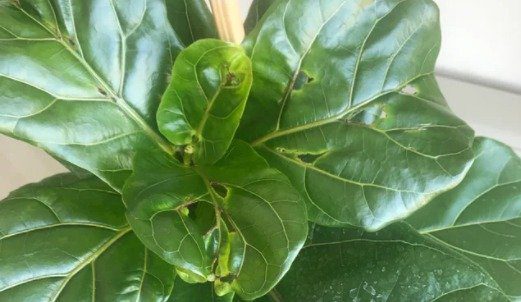
Many homeowners often find holes in their fiddle leaf fig leaves. These holes suddenly appear and can decrease the beauty of this plant. Let’s find out who the culprit is…
Why Are There Holes in Fiddle Leaf Fig Leaves?
The main reason for holes in fiddle leaf figs is due to an insect infestation.
There are two common insects that damage these plants. They are the fiddle leaf fig tree mealybug and the black vine weevil, which are small, sap-sucking insects that feed on the stems of fiddle leaf fig trees.
There is also a chance of leaf fungus, which can occur if the leaves are exposed to excess moisture and poor air movement.
How to Treat Fiddle Leaf Fig with Holes?
There are several steps one can take to treat the holes, but neem oil is great for the majority of cases.
Start by pruning the affected leaves and getting rid of them from the plant as soon as possible. Also, make sure to remove any fallen debris from the floor below because it can serve as a breeding ground for insects.
An important note: DO NOT throw these leaves away in your compost pile just yet! The remaining eggs will hatch into more bugs that may infest your porch or backyard garden area if not properly treated.
Then, apply a neem oil spray (amazon link) to all surfaces of this plant including the leaves and stem. Neem oil is derived from seeds of the neem tree which have been used medicinally by Ayurvedic healers for centuries.
In the case of leaf fungus, you should increase humidity and make sure there is adequate light. In addition to increasing humidity, clean up any fallen leaves from the floor with a vacuum cleaner.
Again, neem oil works wonders here. It is a natural fungicide that will aid in the prevention of leaf fungus.
Care Guide for a Happy Fig
To prevent holes and any other problems in the future, it’s important to give your plant everything it needs to thrive.
Light – Fiddle leaf figs need plenty of natural light, so place the plant in an area where it will receive 6 hours or more of direct sunlight.
Water – Make sure you water this plant regularly (but not too much!) and fertilize every two weeks with a liquid fertilizer diluted to half-strength. Proper drainage is also important because stagnant water will cause root rot.
Temperature – Provide temperature ranges between 65-75 degrees Fahrenheit and humidity levels of over 50 percent. If you can’t meet all of these environmental conditions, you may want to invest in a humidifier or grow light.
Soil – Pot your fiddle leaf fig in a soil mixture that is high in organic material and drains well. You may also want to add a slow-release fertilizer in the pot when you purchase your plant.
Conclusion
In conclusion, yes, you should be concerned if you find holes in your fiddle leaf fig leaves.
However, don’t worry too much – if you take the proper steps to clean it up and treat the problem with neem oil, your plants will flourish like normal within a couple of weeks.
The good thing about neem oil is that it is an all-natural solution that can be used within organic gardening. Thanks for reading! If you enjoyed this article or learned something new, please don’t forget to share it with others so they have a chance to enjoy this free information.
by Gardener Tim | Aug 4, 2021 | House Plants
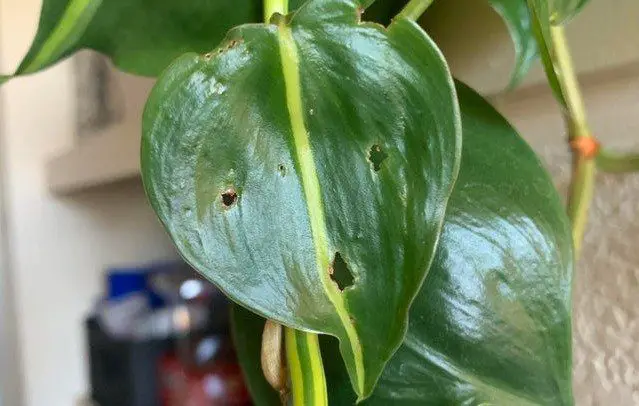
Philodendrons are a beautiful houseplant that can be found in many homes. They have long, broad leaves that range in color from green to brownish-purple. But sometimes you may notice tiny holes or tears in these leaves – so causes these?
This blog post will help explain why your philodendron has holes in the leaves and what you can do to fix the problem. Let’s get into it…
Why Are There Holes in My Philodendron Leaves?
The most likely reason that you’re seeing holes in your philodendron’s leaves is the presence of a pest called liriomyza melanogaster. This is a leaf-tunneling fly that has been shown to attack plants and make them look horrible.
Fortunately, there are steps you can take to stop this destructive insect from making an even bigger mess out of your beloved philodendron.
Though tiny, these bugs do big damage! You may not notice the problem until you find holes in your plant leaves. This is because the insects are most active when you’re sleeping.
There’s also a chance that you’re having an issue with leaf spot disease. This is something to look into, especially if the leaves on your plant have brown spots and patches of yellowing (which can happen when this fungus attacks).
How To Prevent Holes in Philodendron Leaves?
You can protect your philodendron from leaf miners by spraying it with neem oil. The plant will be healthier and happier!
These pests are also known for jumping onto other household plants and causing even more damage, which is why it’s important to keep an eye on every plant in your home.
I recommend not only spraying your philodendron with neem oil (Amazon link to my favorite), but also every plant that is in a nearby location.
If leaf disease is the issue, then it should be treated as soon as you can. Start by removing the diseased leaves from your plant, disposing of them in a faraway location, and then giving the plant some neem oil for extra protection (it works as an effective fungicide.
How To Keep Philodendron Healthy?
Location: Find a spot with bright sun or partial shade. Keep it away from the hot porch, deck, and windows to prevent leaf scorching.
Temperature and humidity: Philodendrons prefer a temperature of 68-80 degrees F and humidity levels between 40%-60%.
Pruning: Once every one or two years in spring, remove old leaves at their base up to about one-third of the way up.
Soil: Philodendrons like a well-draining potting mix with plenty of nutrient-rich soil.
Watering: Keep the soil moist, but not waterlogged.
Fertilizing: Feed with a weak, diluted solution of liquid fertilizer every couple of weeks during the spring and summer seasons.
Conclusion
If you’re not sure what’s wrong with your philodendron, there are a couple of things to consider. Pests could be playing havoc on it and leaf spot disease is really common as well.
The most likely culprit though? Leaf miners! These creatures will burrow into the leaves and cause major damage to your beautiful plants.
You can repel bugs from your houseplants by spraying them with Neem oil. The oils will suffocate the pests and keep future infestations at bay!
by Gardener Tim | Aug 4, 2021 | House Plants
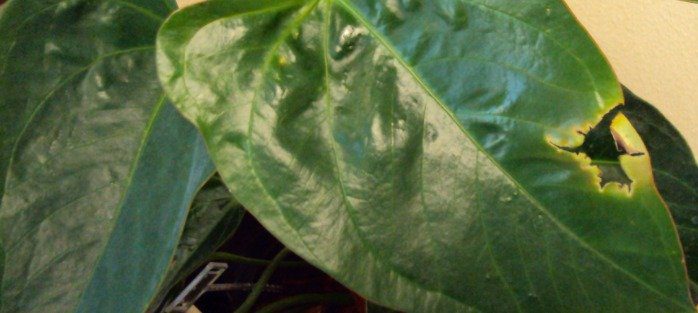
If you have holes in your anthurium leaves, don’t worry! You are not alone. This can happen for a variety of reasons. Here we will discuss the most common causes and how to fix them.
Why Are There Holes In My Anthurium Leaves?
There are holes in your anthurium leaves because there is liriomyza melanogaster, or another pest, present around your plant. These are leaf-tunneling pests that have made their way into your beloved plants causing damage to their leaves.
The pest is sneaky, coming out only at night before burying itself in the day.
If you have noticed brown spots on your leaves, then that might mean that it has contracted the contagious disease of leaf spot. The small, brownish dots begin at the bottom leaves and slowly expand into larger holes as they grow bigger.
How To Prevent Holes in Anthurium Leaves?
You can prevent holes in your anthurium leaves by getting rid of the pests. I like using neem oil, which is a very common pest-control substance. You put it into a small spray bottle and spritz the leaves of your plant with it once in a while when you start to see an infestation beginning.
Neem oil (amazon link) is safe for most plants, but I always recommend doing research on what product is best before using any chemicals or oils around our houseplants!
You can also prevent holes by checking for any signs of leaf spot disease. If you see small brown spots that begin to turn into larger holes, then there is a high chance the plant has contracted it. Neem oil is also a fungicide, so it will prevent anthurium holes if the issue is leaf spot disease.
Most importantly: don’t panic if there are holes in your anthurium leaves – you can fix this problem easily by following these tips!
How To Keep Your Anthurium Plant Healthy?
Location: Keep your anthurium plant in a bright, humid area. Keep it away from the window or any other drafts that might dry out its leaves.
Temperature and humidity: Be careful not to allow the temperature of your anthurium plant to get too high, this will cause its leaves to dry out and turn yellow. This is especially important if you live in a very hot area!
Soil: Be sure to use a good quality anthurium potting mix. I have had success with Miracle-Gro Potting Mix.
Watering: Be careful not to overwater your anthurium plant. Let the soil dry out completely before watering it again! Anthurium plants cannot take being over-watered, but they also don’t like their roots sitting in water for too long – this can cause root rot and kill off your beautiful houseplant.
Fertilizing: Feed your anthurium plant once a month with Miracle-Gro all-purpose fertilizer.
Pruning: Be careful not to over-prune your anthurium plant because it can cause its leaves to turn yellow and dry out. The best time for pruning is when your plant has just finished blooming!
Pests: See the section above on how to prevent holes in anthurium leaves caused by liriomyza melanogaster.
Cleaning: Be sure to wipe off any dust or dirt that has accumulated on your anthurium plant leaves throughout the week. Anthuriums don’t like their leaves being wet for too long and it can cause them to rot, so be careful not to use a spray bottle when cleaning its leaves!
Conclusion
In conclusion, if you have holes in your anthurium leaves, then don’t worry! It’s not a serious issue and there are many ways to fix the problem.
The best solution is to use neem oil to keep pests away and prevent anthurium holes. If you see brown spots that begin to turn into larger holes, then it’s likely the plant has contracted leaf spot disease. In this case, neem oil is also a fungicide, so using it will prevent anthurium leaves from having any more holes.
by Gardener Tim | Aug 4, 2021 | House Plants, Outdoor And Patio Plants
Dracaenas are a common household plant that can be found in many households. They grow well indoors and outdoors, producing beautiful green leaves with interesting shapes.
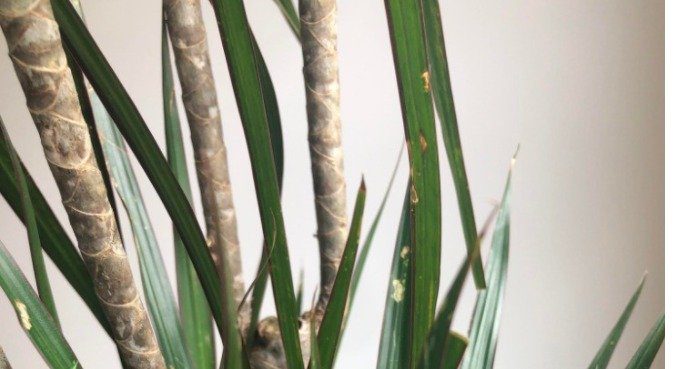
However, they may also produce holes in their leaves as shown below! This article will help you figure out why this is happening so you can take care of your plants more effectively.
Why Are There Holes In My Dracaena Leaves?
There are likely holes in your dracaena leaves because of a pest issue. These pests feed on the leaves, which causes circular holes in the leaves of your dracaena plant.
You may be surprised to hear this as it seems that your plant is pest-free! However, these pests usually only appear at night, which means it’s important to stop them before they destroy your plant completely.
You can help your plants stay pest-free by spraying them with neem oil. This natural fungicide will protect against all the common garden pests and help keep them away for good – even if your dracaena is outside!
If you’re sure that your plant hasn’t got a pest issue, then the holes are likely due to leaf spot disease. You may not have heard of this fungus, but it can be a problem that spreads very quickly and usually stems from too much water on your dracaena. Although it starts as brown spots, the fungus progresses and small holes start to form.
Fungal infections can even result in your dracaena having a soft stem. Again, you need to use a fungicide to stop the fungus from spreading. I recommend spraying all plants in your house with neem oil, which will work as an insecticide and a fungicide.
How To Prevent Holes in Dracaena Leaves?
It is heartbreaking to have a beloved plant destroyed by pests. To prevent this, start with applying neem oil spray! This environmentally-friendly product keeps your plants safe from numerous pesky insects and fungus.
Not taking action can result in pests appearing on every single plant in your house! This is a serious situation that needs to be addressed, which is why I use neem oil on every houseplant, even if I only notice the pests on one plant.
How To Keep Your Dracaena Healthy?
Location: The dracaena is known to thrive in a lot of light, but not when they’re hit with direct sunlight.
Watering: I struggled with watering my dracaena for many years until I finally discovered a simple trick. Allow the top few inches of soil to dry before watering again, and water every week in summer or fortnight during winter. This is easy enough so you don’t forget!
Fertilizing: Dracaenas is a tough plant to keep alive. When they lose leaves, feed them with an all-purpose fertilizer twice a month during the growing season for best results.
Temperature: Your dracaena will thrive when it is kept at a temperature between 60 and 80 degrees F. If you want to make sure your plant stays healthy, invest in an indoor thermometer or use the one on your phone because of outdoor temperatures may fluctuate during different seasons.
Humidity: Make sure the environment for your dracaena is at least 50% humidity.
Soil: Always make sure to plant your dracaena in well-draining soil. You’ll want to use a peat-based potting mix so the roots can absorb water while staying moist.
Conclusion
In general, the most common reason for holes in your dracaena leaves is leaf spot disease or pests. If you’ve ruled out that it’s either one of these two problems, then there may be something more serious going on with your plant.
by Gardener Tim | Aug 4, 2021 | Plant Care
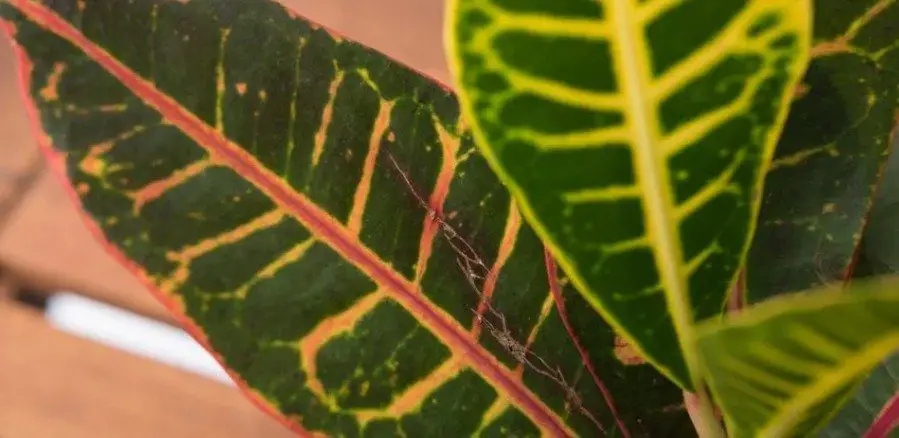
Ever noticed that there are holes in the leaves of your croton plants? If you have, then you might be wondering why they’re there. It’s a good question and one that has been researched for many years. There are two general theories about what causes these holes to form on the leaves of this plant. Let’s inspect both…
Why Are There Holes In My Croton Leaves?
The most likely reason for holes in your croton leaves is because of leaf-eating insects. There are two main types of insects that can cause this type of damage – aphids and mealybugs.
Aphids are small green or black bugs with long tails, while mealybugs look like tiny pieces of cotton stuck to the leaves. Both feed on sap from your plant which is why holes in the leaves usually happen near where new shoots emerge from older stems.
Leaf spot disease is another possible cause of holes in croton leaves. This disease can be identified by circular spots with dark, reddish-brown borders growing on the lower surface of leaves.
How To Prevent Holes in Croton Leaves?
Neem oil is a natural pesticide that can be used to treat plants infested with aphids and mealybugs. Horticultural oil is another option for controlling pests, but it works best during the winter months when temperatures are below 60 degrees Fahrenheit (15°C).
If you suspect leaf spot disease as a cause of holes in croton leaves, then neem oil (amazon link) can help control this condition as well. You should also avoid overhead watering which helps prevent leaf spots from becoming an issue.
Quick Care Guide
The best conditions are bright light with at least four hours of direct sunlight each day, moderate humidity levels (around 50 percent), and temperatures between 65 and 80 degrees Fahrenheit (18-27°C).
Crotons are plants that like a hot of water and humidity, otherwise the croton leaves will droop. It’s important not to overwater your plant but also make sure the soil drains easily – never let it sit in water or allow its crown to be covered by standing water.
Make sure you use potting mixes that contain plenty of peat moss as this will promote good drainage. If there is still an issue with holes forming on new shoots then consider applying neem oil once or
When it comes to fertilizer, you should only use liquid fertilizers diluted to half strength once every two weeks during the spring and summer.
I keep my croton plant in my entryway where it gets plenty of bright light but also has the ability to dry out quickly. It’s also an area where pests struggle to get to!
Conclusion
In conclusion, holes in your croton leaves are most likely caused by leaf-eating insects or leaf spot disease. Either way, the best first step for preventing them is to use neem oil as a natural pesticide, which will kill off pests and prevent outbreaks of fungus on new leaves.