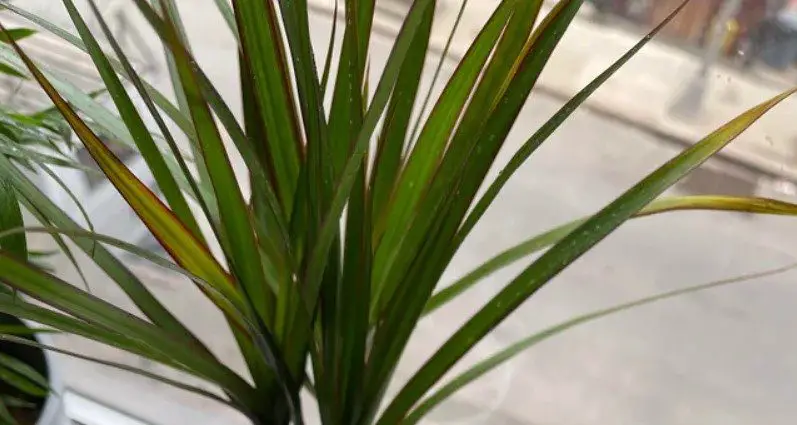
The dracaena is one of the most popular plants on the market because it is so hardy and can grow in almost any environment, including low light conditions.
However, there are situations when your dracaena leaves might be turning yellow! This blog post will discuss some of those reasons as well as how you can help save your dracaena from what’s happening.
Why are my Dracaena Leaves Turning Yellow?
Your dracaena leaves are turning yellow due to overwatering. The dracaena is a hardy plant that only needs watering when 50% of the soil is dry, which means that it’s easy to give the plant too much water.
Let’s explore the most common causes of yellowing leaves on a dracaena and what you can do about them.
Dracaena Leaves Turning Yellow from Overwatering
When you notice the leaves of your dracaena turning yellow, that’s a sign that it is getting too much water. Watering should only occur when the top 50% of soil has dried out, so let it dry between watering to help prevent overwatering and save your plant!
Normally I would suggest using your finger to test if the top inch of soil is dry. However, dracaena plants like dry soil, so I recommend letting the top few inches of soil go dry.
This means using a moisture meter is the most accurate way to test when it’s time to water. You may be surprised to know that I frequently only water my dracaena every 4 weeks!
When it does come to giving your dracaena a drink, I suggest using room temperature water that is filtered. The worst thing to do is use hot or freezing water, as this will shock the roots and make them unable to take up nutrients.
Dracaena Leaves Turning Yellow from Too Little Sunlight
Another reason that your dracaena leaves are turning yellow is because of too little sunlight. Dracaenas like bright, indirect light, but should never be placed where they will receive direct sun exposure for most of the day.
You can fix this issue by moving the plant to a brighter location. If this is not possible, I recommend adding some grow lights onto your dracaena’s planter to add some supplemental lighting (Amazon link to my favorite).
I use grow lights on all my houseplants during the winter. If I didn’t, then they would get nearly no light at all! However, don’t put the lights too close or you may burn the leaves.
Dracaena Leaves Turning Yellow from Stress
Stress is another reason that your dracaena leaves may be yellowing. It’s possible for the plant to become stressed from changes in lighting and environment, transplant shock, pests such as aphids and mites, over-fertilization due to incorrect application of fertilizer (only use a weak solution once every other month), or overcrowded pots.
This is why I only re-pot when it is absolutely necessary, as this is one of the biggest causes of stress in dracaenas. In fact, many people make the mistake of re-potting a dracaena with yellow leaves, which tends to only make the issue worse (unless the plant is suffering from root rot).
Yellow Dracaena Leaves FAQs
You may still have some concerns and questions, so I will now answer some of the most frequently asked questions I receive about yellow dracaena leaves.
Should I cut yellow leaves off the dracaena plant?
These leaves are as good as dead, so feel free to cut them off. Use sterilized scissors to cut above the node while trying to avoid damaging the healthy leaves.
Is it normal for my dracaena to lose some of its lower leaves?
Yes! As your dracaena grows, it’s normal to see some of the lower leaves drop off. If they are yellowing or browning instead of just drooping down, then that may be a sign that something is wrong with the plant and you should check your care routine for any potential problems.
Will too little light cause my dracaena leaves to turn yellow?
Yes, green leaves will turn yellow if they don’t get enough light. However, too little light isn’t the only problem. Yellow dracaena leaves can be a sign of several different problems, including overwatering and stress.
Will too much water cause my dracaena leaves to turn yellow?
Yes, yellow dracaena leaves are a sign of overwatering. It’s important to minimize the amount you water your plant, while also ensuring that it is draining properly and not sitting in excess water for extended periods of time.
Will yellow dracaena leaves turn green again?
It’s unlikely that a yellow dracaena leaf will turn green again, so cutting the leaves off is recommended.
Conclusion
In conclusion, your dracaena leaves turning yellow can be due to overwatering, too little sunlight, or stress. The plant is likely suffering from root rot if the bottom of the soil has turned black and mushy (which will also cause all new growth to turn brown).
Here’s a little reminder of what we went over today…
Overwatering – Make sure you only water when 50% of the soil is dry. If it’s still in a pot with drainage holes, make sure not to let water sit at its base for long periods after watering because this could mean that your plant isn’t getting enough air circulation which causes roots/rot problems!
Too little sunlight – If your plant still needs more light, find a brighter spot for it!
Stress – Make sure you only re-pot if necessary, which means when there are roots growing out of drainage holes or soil has compacted so much water can’t seep through easily.
Try moving houseplants away from drafty areas like open windows and doors because this will also cause stress on plants. Consider using humidity trays under potted plants during the winter months.
Dracaena plants are popular houseplants, but many people have noticed that their plant stems are soft and squishy. In this article, we will explore the reasons why your dracaena is doing this.
Why Does My Dracaena Have a Soft Stem?
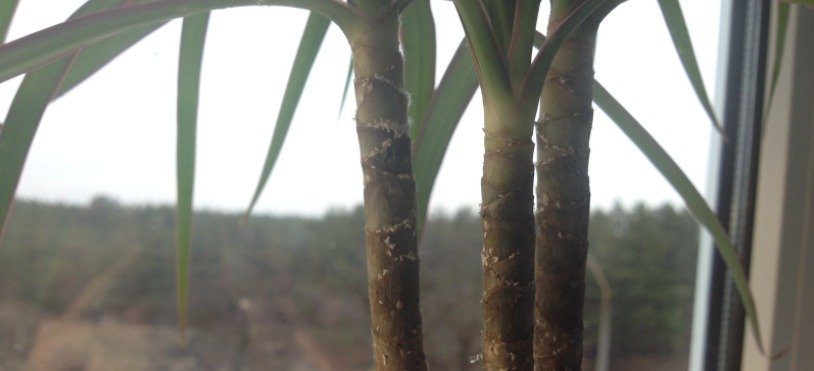
Your dracaena has a soft stem because the stem has died. Many people have this question because their plant appears fine, but the stem is soft. The stem has likely been dead for a while, which means it will not recover and should be removed from the plant to prevent rot or mold.
You can tell whether your dracaena’s stem is alive by gently tugging on a leaf near the bottom of the plant. If you notice that there is resistance when pulling at the leaf, then the stem is alive. If there is no resistance when pulling at the leaf, it means that your dracaena’s stem has died.
In most cases, a dracaena’s stem will have turned soft and squishy because of water-related damage or from being overwatered. This can cause root rot which kills plants quickly by rotting out the roots at their base.
Dracaena Root Rot Symptoms
The stem has turned to mush with visible signs of fungus growing on top OR Stems have completely rotted away leaving only a stump behind. This happens quickly, so if you find yourself in either situation, then take action right now before it spreads any further!
Should I Remove Soft Dracaena Stem?
Yes, the stem is dead, so it is best to remove the entire thing. If you don’t, then more of your plant will likely start turning soft and squishy, which would be a very bad sign for your dracaena’s health overall!
How Should I Water My Dracaena?
Water your dracaena deeply but not too often. Allow the soil to dry out before watering again. Dracaenas like slightly moist conditions, so only water when you notice that the top few inches of the soil are dry.
I tend to water my dracaena every 3-4 weeks in the summer and every 4-5 weeks in winter. This is because the plant is happy to stay dry for long periods. As you can tell, dracaenas are hardy plants!
Watering too much will cause root rot and fungal issues, which can spread around the rest of your plant – uh oh!
Conclusion
In conclusion, your dracaena plant has squishy stems because of water-related damage or from being overwatered. This can cause root rot, which kills plants quickly by rotting out the roots at their base.
This is sad news to hear, but it’s important information for you to know. To prevent it from watering again, make sure to follow proper dracaena watering rules. Remember, this type of plant is happy to stay dry for longer periods of time.
I hope you have enjoyed this article! If so, feel free to use the search bar to enjoy my other houseplant articles.
If you have a Bird of Paradise plant, you may have noticed some brown spots on the leaves. This is a common problem for these plants, and there are several things that can cause it. In this blog post, we will discuss the causes of brown spots on Bird of Paradise plants, and we will also provide some tips on how to treat them.
Why Does My Bird of Paradise Have Brown Spots?
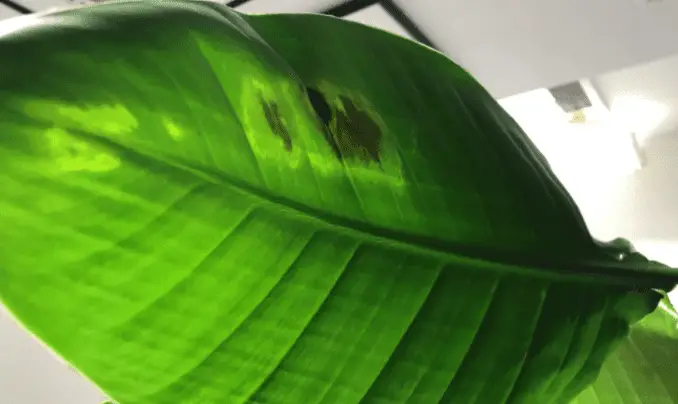
The most common reasons for brown spots on Bird of Paradise plants are fungal infection, over-fertilization, pest infestation, and edema. Fungal issues are usually the culprit, but any of these could be the cause.
Let’s discuss each of these causes in more detail.
1) Fungal Infection
If you notice that the brown spots on your plant are accompanied by fuzzy, white mold, then it is likely that your plant has a fungal infection.
But what causes fungal infection in the first place? There are several things that can contribute, including too much moisture, poor air circulation, and high humidity.
This means that if you live in an area with high humidity, or if you water your plants too often, you may be more likely to experience fungal infections. While Bird of Paradise does enjoy high humidity, they do not like to be constantly wet.
In addition, it is important to provide good air circulation for your plants. If you have Bird of Paradise plants that are growing indoors, make sure to position them near a window where they will get some airflow.
Finally, if you notice any other plants in your home that have a fungal infection, it is important to remove them from the area immediately. This will help to prevent the spread of the infection.
How to Treat Bird of Paradise with Fungal Infection?
Once you have determined that your plant has a fungal infection, you will need to take action to treat it. The first step is to remove any affected leaves. Once you have done this, you can treat the plant with a fungicide.
There are many different fungicides available on the market, so be sure to choose one that is specifically designed for Bird of Paradise plants. My favorite is neem oil (Amazon link), which is made from the neem tree and is a natural fungicide.
To use neem oil, mix it with water according to the instructions on the bottle. Then, use a spray bottle to apply it to the affected areas of your plant. Be sure to cover the entire plant, including the undersides of the leaves.
2) Over-Fertilization
Another common cause of brown spots on Bird of Paradise plants is over-fertilization. If you fertilize your plant too often, or if you use too much fertilizer, it can build up in the soil and damage the roots of your plant. This can cause a variety of problems, including brown spots on the leaves.
Here, the brown spots will look like scorches or burns. If you think that your plant has been over-fertilized, the first step is to flush the soil with water. This will help to remove some of the excess fertilizer from the roots.
Once you have done this, it is important to cut back on fertilization. Only fertilize your plant every few months, and be sure to use a light hand.
3) Pest Infestation
Another possible cause of brown spots on Bird of Paradise plants is pest infestation. If you notice that the brown spots are accompanied by small, dark insects, then it is likely that your plant has pests.
In fact, you will also likely notice small holes in the leaves, as well as a sticky substance on the leaves or stems. This sticky substance is called honeydew, and it is excreted by aphids and other pests.
Guess what loves eating honeydew? Ants! So, if you see ants on your plant, it is a good indication that there are pests present.
There are many different types of insects that can infest Bird of Paradise plants, including aphids, scale, and mealybugs. These pests will suck the sap from the leaves, which can cause them to turn brown. In addition, the honeydew that is excreted by the pests can encourage the growth of mold.
How to Treat Pest Infestation on Bird of Paradise?
So, how do you get rid of pests? The first step is to identify what type of pest is infesting your plant. Once you have done this, you can choose an appropriate pesticide.
There are many different pesticides available on the market, so it is important to choose one that is specifically designed for the type of pest you have. For example, if you have aphids, you can use insecticidal soap.
To use insecticidal soap, mix it with water according to the instructions on the bottle. Then, use a spray bottle to apply it to the affected areas of your plant. Be sure to cover the entire plant, including the undersides of the leaves.
You will need to reapply the insecticidal soap every few days until the pests are gone. Once they are gone, be sure to wash your plant with water to remove any residue.
4) Edema
Edema is a condition that can cause brown spots on the leaves of Bird of Paradise plants. It is caused by an imbalance in the roots, which causes water to build up in the tissues of the plant. This can cause the leaves to swell and turn brown.
Edema is most common in humid climates, or if the plant is not getting enough water. If you think that your plant has edema, the first step is to water it more frequently. You can also try moving it to a cooler, less humid location.
Should I Prune Brown Bird of Paradise Leaves?
It’s not always necessary to prune brown leaves off your Bird of Paradise plant. If the brown spots are caused by a nutrient deficiency, then pruning will not solve the problem. In fact, it may even make the problem worse.
If you do decide to prune the brown leaves, be sure to sterilize your pruning shears before using them. This will help to prevent the spread of disease.
To sterilize your pruning shears, dip them in a solution of one part bleach and nine parts water. Let them soak for at least five minutes, then rinse them with water and dry them with a clean cloth.
Once you have sterilized your pruning shears, cut off the affected leaves at the base of the plant. Be sure to dispose of the leaves in the trash, as they can harbor pests or diseases.
Again, it’s not necessary to prune brown leaves, but pruning for aesthetics is a personal choice. Your plant will not be harmed if you choose to prune.
Conclusion
As you can see, there are many different reasons why your Bird of Paradise plant might have brown spots on the leaves. However, don’t despair! With a little bit of detective work, you should be able to figure out the cause of the problem.
Once you know what is causing the brown spots, you can take steps to treat the problem. With the proper care, your plant will soon be looking as good as new!
Do you have a Bird of Paradise plant that has brown spots on the leaves? Have you been able to figure out what is causing the problem? Let us know in the comments below!
Have you ever seen a monstera plant and wondered what the bumps on the stem were? This blog post will explore how these bumps are formed, why they form in some plants but not others, and what they mean to your plant. Have fun with this article!
What Are the Bumps on Monstera Stem?
The bumps on your monstera stem are likely just small aerial roots that grow out of your plant to help it anchor itself. They are the first sign that you have a healthy, mature monstera that is developing as it should.
These small bumps on a monstera stem can also grow into full roots that will anchor the plant even further and allow it to climb.
Another possible answer is that your monstera has scale, which is a common pest to indoor plants. If this is the case, you should read up on the scale to get rid of it before your plant becomes infested!
What Are Aerial Roots?
You may be wondering what these so-called “aerial roots” are. Well, they are the first part of the plant that is used to explore its surroundings.
They are essentially just roots, but they grow out of your monstera stem, instead of the underground like more traditional plants. I recently wrote a whole article on monstera aerial roots – check it out!
What Is Scale?
Scale is a common pest that attacks plants. It sucks the plant’s juices and causes leaves to drop off, yellowing can happen as well – pretty nasty!
If you suspect your monstera has scale, don’t worry too much about it because they are relatively easy to get rid of with some simple steps.
How To Get Rid of Scale on Monstera Plant?
If the small bumps on your monstera are scale, then you should act soon. Scale is a fast-growing pest that will destroy your monstera plant if you don’t kill it.
You are likely to find the scale on the stems, leaves, and joints of your plant. The bumps can be white or brown in color depending on how mature they are.
To get rid of monstera scale, you should spray your plant down with neem oil (Amazon link) or insecticidal soap. Make sure to spray all houseplants that are close to your monstera as well, as scale can spread very easily.
Conclusion
In conclusion, the bumps on monstera stem are usually just young aerial roots, but they can become anchoring roots. They are a sign of health in your plant, so do not worry if you see them!
I hope you found this article to be interesting! If you did, feel free to read my other articles on these beautiful houseplants.
Aglaonema is a group of plants that are often used as indoor houseplants. They are easy to grow and care for, but there might be times when an aglaonema will turn yellow. If you’re looking at your plant and it’s not so green anymore, read this article to find out why the leaves have turned yellow!
Why Is My Aglaonema Turning Yellow?
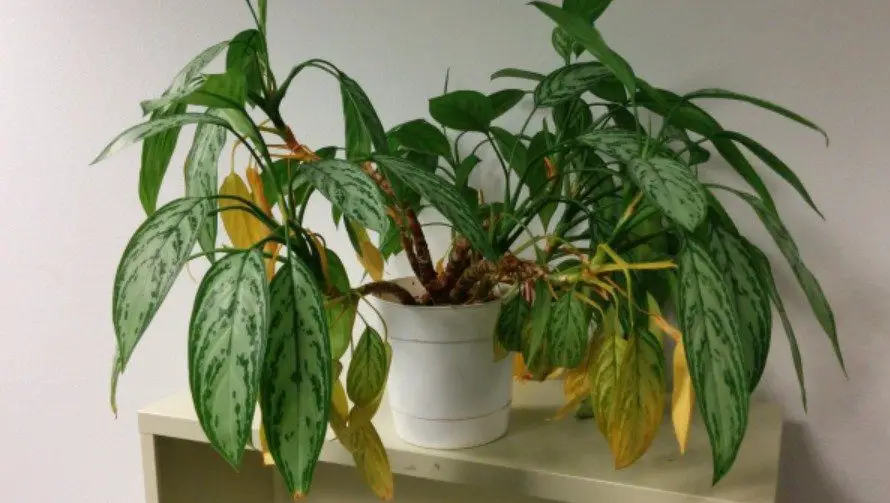
Aglaonema leaves turn yellow when they have been overwatered, been kept in the dark, or due to stress. However, the most common reason for aglaonema leaves turning yellow is overwatering.
Let’s explore these causes in more detail and what you can do about them.
Yellow Aglaonema Leaves from Overwatering
If you have a plant that is turning yellow, check the soil. If it appears soggy and water runs through your fingers when trying to dig in for a finger test, then your aglaonema has been overwatered.
When plants are over-watered they begin to suffocate because there is too much moisture around their roots preventing air from getting in. This lack of oxygen will cause leaves to turn yellow or brown at the tips and edges with some discoloration appearing on leaf undersides.
To fix overwatered aglaonema plants, you should stop watering, then let the plant dry out for a few days or weeks – depending on how much water you were giving it before.
If the plant also has root rot from the overwatering, you will need to repot it into a new container with potting soil. Then, you should treat the plant by removing all of its old soil and replacing it with a new potting mix – which will help prevent future problems from occurring again.
Yellow Aglaonema Leaves from Too Little Sunlight
The second reason your aglaonema is turning yellow could be because it isn’t getting enough light.
Your plant needs bright, indirect sunlight every day in order to survive and grow properly so its leaves can stay green. If you’re keeping your plant indoors, make sure that there are at least four hours of exposure to the sun during the day – but never directly under a window as this may burn the leaves, rather than giving them their needed dose of healthy light.
If you don’t have access to natural sunlight for an indoor houseplant like aglaonema, then artificial lighting ( Amazon link) is a good alternative. These lights work by emitting the same type of light your plant would be receiving during the day if it was outside.
Yellow Aglaonema Leaves from Stress
If your plant has recently been moved to a new location, or if you’ve started fertilizing it for the first time ever – then this could be why its leaves are turning yellow.
When plants get stressed out they lose their healthy green color and may turn various shades of brown or yellow instead.
You can reverse this process by making sure that your aglaonema gets back to being comfortable again. This means no more re-potting or major changes to its environment.
Yellow Aglaonema Leaves FAQs
Aglaonema plants aren’t the easiest plants to take care of. As such, you may find yourself with a few more questions about why some of your aglaonema leaves may be turning yellow.
Should I cut yellow leaves off the aglaonema plant?
Yellow leaves on a houseplant like an aglaonema can simply be cut off and thrown away. The leaves are already dead and not serving the plant anymore, so you don’t have to worry about doing something else with them.
Can I use a yellow leaf from my aglaonema as compost?
Yellow leaves from your houseplant can be used in compost piles if that is an option for you! You should tear or cut away any remaining stems or veins before adding them into your pile, though.
Is it normal for my aglaonema to lose some of its lower leaves?
It is normal for aglaonema plants to lose some of their lower leaves. They are not as strong and healthy as the rest, so they can turn yellow or brown quickly when exposed to too much light, lack of water, or poor soil drainage.
Will too little light cause my aglaonema leaves to turn yellow?
Yes, if your plant is not receiving any natural or artificial light for an extended period of time it will begin to turn yellow. You can fix this problem by moving the plant near a window so that it gets at least four hours of sunlight every day.
Will too much water cause my cat palm leaves to turn yellow?
Yes, if your plant is getting too much water for an extended period of time it will begin to turn yellow. You can fix this problem by allowing the soil to dry out a bit more before watering it again.
Will yellow aglaonema leaves turn green again?
No, it is very rare for yellow aglaonema leaves to turn green again.
Conclusion
In conclusion, there are a number of reasons why your aglaonema plant may be turning yellow. The most common cause is overwatering, which you can fix by letting the soil dry out and giving it less water in the future. However, if this doesn’t work or if root rot has set in – then there’s repotting to consider as well!
If your plant was moved recently, had an adjustment period with new fertilizer or lighting – then that could explain its current color too. Stress makes plants lose their healthy green shade when they become overwhelmed due to change.
I hope this blog post answered your question about why your aglaonema leaves are turning yellow. If you have any other concerns or questions, feel free to leave a comment below!