ZZ plants are a great way to add greenery and color to your home. They also make a perfect gift for someone who has everything! But what do you do when the leaves on your ZZ plant start turning brown?
You may be surprised by the answer – don’t worry, it’s not as bad as you think! In this blog post, we will review some of the most common reasons that ZZ plant leaves are turning brown.
Why Are the Leaves on My ZZ Plant Turning Brown?
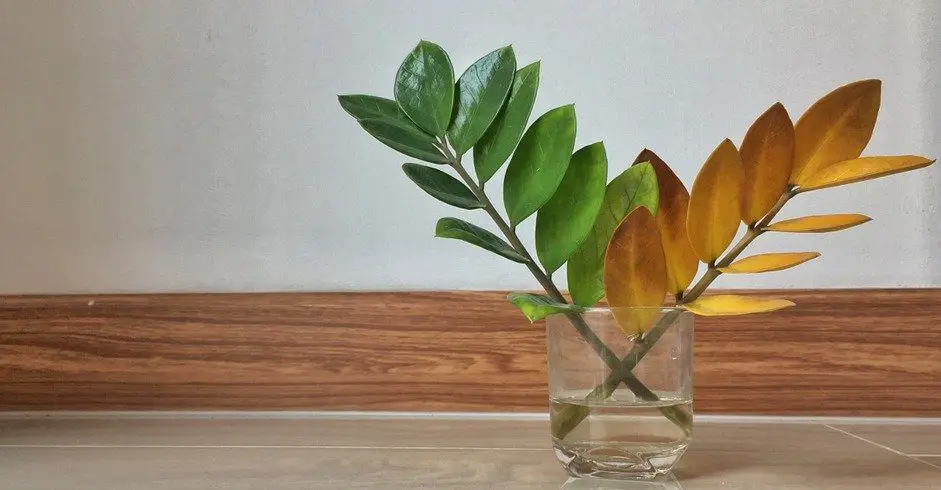
Your ZZ plant is turning brown as a result of overwatering or leaf burn. The two causes give leaves that have similar brown coloration but overwatered brown ZZ plant leaves tend to be wet, whereas sun-scorched brown leaves are usually dry and crisp.
I will go into greater detail on each of these reasons and what you can do to prevent them both.
Brown ZZ Plant Leaves from Too Much Water
ZZ plants should be watered well once every one to two weeks and they prefer for their soil to dry out between watering. If their soil stays wet for extended periods of time, this can cause the tips of new growth on a ZZ plant to turn brown before eventually beginning to rot from an overabundance of moisture within its root system.
In order to prevent this issue, ensure that your potting mix drains very quickly after being re-watered – peat moss-based soils will drain faster than most other types.
On a similar note, make sure to always use pots with drainage holes! This reduces the amount of time the roots will be sitting in a pool of water. Failure to do this can cause root rot for your ZZ plant.
If it’s already too late, then you will have to tackle the root rot immediately by removing your ZZ plant from its pot and then gently removing any rotten leaves.
Wash away as much of the rotten soil as you can before placing it back into a container with fresh, dry peat moss-based soil.
Remember to reduce how often you water – aim to only water when the top inch of the soil is dry to the touch. You can test this by sticking your finger in the soil or using a moisture meter.
Brown ZZ Plant Leaves from Too Much Sunlight
ZZ plants are native to subtropical and tropical regions of Africa, but they can become sunburned when placed in direct sunlight. Sun scorch will cause the tips of new growth on a ZZ plant to turn brown before eventually beginning to rot from too much heat.
In order to prevent this issue with your ZZ plant, make sure that it gets at least four hours per day of filtered or indirect light – most rooms without southern exposure usually qualify for this requirement!
If your plant is already sunburned, you can use a spray bottle to mist it with water and then move the plant to a shadier location that doesn’t receive as much sun as before
Brown ZZ Plant FAQs
ZZ plants can be rather difficult to manage at the best of times. As such, I’ve received a lot of questions about them from readers. Let’s go over some common questions now!
Will brown ZZ plant leaves turn green again?
No, it is very unlikely for brown ZZ plant leaves to turn green again. The good news is that you can prevent the current green leaves from turning brown by following a strict watering schedule.
Should I remove brown leaves from ZZ plant?
Yes, you should always remove any brown ZZ plant leaves immediately to prevent the spread of disease and rot in your potting mix. Use a pair of sterilized scissors or clippers for this task.
Will too much water cause ZZ plant to turn brown?
Yes, if your ZZ plant is left sitting in water for too long, this can cause the tips of growth to turn brown. This is why it is important to always use pots with drainage holes and never leave your ZZ plant sitting in water.
When I touch my ZZ plant, it seems like there is moisture on it?
This can sometimes mean that the humidity in your home is too high or the plant has been given too much water. In fact, some plants weep when given too much water.
Will direct sun cause ZZ plant leaves to turn brown?
Yes, if your ZZ plant is left in direct sunlight for too long, this can cause the tips of new growth to turn brown. Also, plant owners should be careful about using grow lights. While I love using them during winter, it is important to slowly build up your plant’s tolerance.
Conclusion
In conclusion, it is normal for the leaves on your ZZ plant to turn brown at some point. Hopefully, this blog post has answered any questions you may have about why they are turning brown and what you can do to prevent it from happening again!
Make sure to follow the rules in regards to watering and sunlight, such as ensuring that the soil drains fast enough.
ZZ plants are one of the most popular species of houseplant. They have dark green leaves and a yellow stripe down the middle. But sometimes, these striped leaves turn yellow for no obvious reason. keep reading this blog post to find out why your ZZ plant’s leaves are turning yellow!
Why Are the Leaves on My ZZ Plant Turning Yellow?
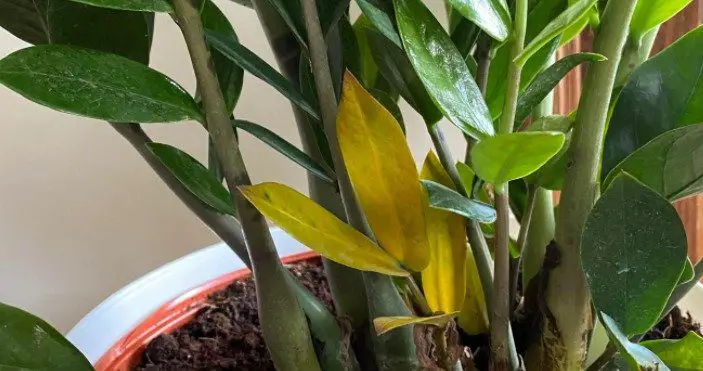
Your ZZ plant leaves are turning yellow because the plant has been overwatered, it hasn’t received enough light, or the environment is causing stress.
Let’s now explore the most common causes of yellowing leaves on a ZZ plant and what you can do about them.
1. Overwatering
ZZ plants grow in wet and humid tropical forests, where the soil is always moist. However, this doesn’t mean you should water your plant every day because it will rot if left to sit too long in soggy soil!
The symptoms of overwatering are yellow leaves that fall off easily or stay green but droop downwards. Sometimes, you may also see dark patches on the stem and roots growing out from below the pot’s drainage holes.
If you think your ZZ plant might have yellow leaves due to being overwatered, make sure you do the following:
– Reduce watering to once a week. When in doubt, wait until the top of the soil is dry before watering again. You can check this by putting your finger into the top inch of the soil. Alternatively, you can use a moisture meter if you have one.
– Check that there are drainage holes at the bottom of your pot. If not, add some so excess water can drain away faster and prevent rotting roots from occurring underneath.
2. Not Enough Sunlight
ZZ plants are also sensitive to too little light, which will cause their leaves to turn yellow. However, the symptoms of this problem are a bit different from those caused by overwatering.
If your ZZ plant has been receiving less light than usual and its leaves have started turning yellow, you can tell there is no more time for delay! Move it into direct sunlight as quickly as possible because ZZ plants need at least six hours of indirect sun each day to thrive indoors.
LED grow lights (Amazon link) act as a solution for when it’s not possible to give your plant enough light. They provide the optimal wavelengths of light for plant growth, and they help your ZZ plants grow faster with a lower risk of them turning yellow.
3. Stress
There are a lot of things that can cause stress to your ZZ plant, including sudden changes in temperature or moving it from one location to another.
If you think this might be the problem with your ZZ plant’s leaves turning yellow, make sure you do the following:
– Give it time! Sometimes, yellowing is simply due to environmental factors beyond our control and will reverse itself in a few weeks’ time. Make sure you’re not overwatering and keep providing plenty of natural light for the best results.
ZZ plants require very little care when they’re healthy but they turn into deadly divas if their basic needs aren’t met!
Now that we’ve discussed some common causes of leaf discoloration on these beautiful plants, you’re ready to keep them green and healthy for many years.
As you can from the thumbnail, this video shows how this person saved their zz plant. Give it a watch to learn about the steps they took.
ZZ Plant Leaves FAQs
I will now discuss some of the most frequently asked questions when it comes to yellowing leaves.
Should I cut yellow leaves off the ZZ plant?
Yes, you should remove any yellow leaves from your plant. Although it may seem like a waste of time, this is actually beneficial because doing so will make the remaining healthy green leaves grow larger and more quickly!
Is it normal for my ZZ plant to lose some of its lower leaves?
Yes, it’s normal for ZZ plants to lose some lower leaves. But if you notice this happening all over the plant, it may be receiving too little light or is suffering from toxicities like root rot.
Will too little light cause my ZZ plant to turn yellow?
Yes, providing your ZZ plant with less light than it needs for at least six hours per day will cause the leaves to turn yellow. This is because ZZ plants require sunlight in order to carry out photosynthesis, which provides them with energy!
Will too much water cause my ZZ plant leaves to turn yellow?
Yes, this is another reason why your ZZ plant’s leaves could turn yellow. This happens when too much water accumulates at the bottom of its pot because there are no drainage holes, and it can cause rotting roots to occur underneath.
Will yellow ZZ plant leaves turn green again?
No, yellow leaves are very unlikely to turn green again. You should focus on stopping any more green leaves from turning yellow.
Conclusion
In conclusion, there are a variety of causes for yellow leaves on ZZ plants. If you’ve been noticing some drooping or yellowing, read this post to figure out what’s going wrong with your plant and how to fix it!
I hope this post has been helpful! Please do view my other posts on ZZ plants and other indoor plants.
Aloe vera is a popular houseplant that can be found in many homes across the country. This plant has been used for centuries to help heal cuts and burns, but it is also a beautiful addition to any room!
In order to keep your aloe vera healthy throughout winter, there are some steps you must take. Read on below for our Aloe vera plant winter care guide.
How Do You Take Care of an Aloe Plant in the Winter?
The best way to take care of an aloe Vera is to keep it in a sunny spot. If you don’t have access to sunlight, using grow lights is an effective alternative as well! However, if kept outside during the winter months, your aloe plant will need some protection from the cold weather.
I will now go over the care and maintenance of an aloe vera during winter. By the end, you will be able to keep your plant fresh and healthy until the next growing season.
Watering an Aloe Vera in Winter
The amount of water an aloe plant needs will vary depending on the season. In winter, you should not be watering your houseplant as much as in other seasons. Aloes do best when they are slightly dry!
In order to prevent problems from occurring during the winter months, reduce how often you water your aloe vera by about 70%. This means that you should only be watering your aloe plant every three weeks or so during winter.
Lighting an Aloe Vera During Winter
As mentioned above, grow lights (Amazon link)are a great way to provide light for aloe vera plants even in the winter months! However, if you do not have access to them, placing your houseplant near a window will help as well.
If there is not enough natural sunlight coming in through your windows, you will need to supplement with grow lights or other artificial lighting sources. It’s important that all parts of the plant are receiving sufficient amounts of light.
Aloe Vera Humidity Requirements in Winter
Aloe vera plants like moderate humidity of around 40% during the winter. This is because the plant thrives in warm climates that are known for dry heat.
If you notice that your aloe vera’s leaves are beginning to wilt, it might be a sign of too much humidity! To prevent this from occurring, keep the houseplants away from moisture-source, such as dishwashers and humidifiers.
Where To Keep Aloe Vera Inside During Winter?
Keep your aloe vera in an area of the home that does not get too cold. If your aloe plant is kept near a drafty window, for example, you will want to find another spot during the winter months.
You also need to make sure that your aloe vera is not in a drafty area during winter. If the air around it is too cold, you will want to keep your houseplant somewhere warmer.
I keep my vera in my kitchen window during the winter. This area receives plenty of sunlight, but is away from any cold drafts, which makes it an ideal spot for your aloe vera!
Aloe Vera Winter Care FAQ
Caring for an Aloe Vera in winter is a complicated subject. As such, I shall now answer some of the most frequently asked questions.
How often should I water my aloe vera during winter?
It’s important to only water your aloe vera during the winter months every 3-4 weeks. This is because the plant needs to be kept slightly dry during this time. Soggy soil is a succulents’ worst nightmare!
Can I keep my aloe vera outside in the winter?
No, I don’t recommend keeping your aloe vera outside in the winter. It is best to keep this plant inside under grow lights or by a window for sufficient amounts of sunlight and warmth.
Can aloe vera survive winter?
Yes, if you follow our Aloe Vera Winter Care guide, your plant will survive the winter and be healthy until its next growing season.
Should I fertilize my aloe vera in the winter?
There is no need to fertilize your aloe vera during the winter months. However, you can do so in the springtime if it has been a while since its last feeding!
Do aloe vera grow new leaves in winter?
No, aloe vera plants will not make new leaves during the winter months. You can expect a lot of growth in the springtime, though!
What temperature is too cold for an aloe vera?
The temperature should never drop below 50 degrees Fahrenheit. If your house gets colder than this, you will need to place your aloe vera in a warmer area of the home!
When should I bring my aloe vera inside during winter?
Yes, you should bring your aloe vera inside when the temperature drops below 50 degrees Fahrenheit. If you do not, your plant could succumb to frostbite and die!
Should I move my aloe vera away from the heater in winter?
Yes, if your aloe vera is near a space heater or fireplace, you will need to move it away from the heat source. This could cause damage to its leaves! In fact, most plants are vulnerable to sunburn, which causes the leaves to turn brown and crispy.
Conclusion
In conclusion, aloe vera winter care is a very complicated subject. There are many things to consider when caring for your plant in this time of year, such as where you should place it and what kind of lighting it receives!
However, if you follow the Aloe Vera Winter Care guide laid out here, you will be well on your way to having a healthy and happy aloe vera plant.
As the summer season comes to an end, many of us are spending more time indoors with our plants. While it is important to make sure that your plant has enough light and water, there is one thing you should be wary of… sunburn.
In this article, we will be discussing whether philodendrons get sunburn and if so how to treat it.
Can Philodendron Get Sunburn?
Yes, philodendrons can get sunburn, but only if they are exposed to direct sunlight for an extended period of time. When your plant is getting the correct amount of light, then it should be bright green in color with leaves that are firm and tightly packed together.
However, philodendrons that receive too much light will start to turn brown and lose their leaves. While the lower and inner parts of your plant will start to look crispy and scorched, these damaged areas can sometimes spread throughout the entire stem if you don’t take action soon enough.
Therefore, it is important to keep a close eye on any philodendron that has been exposed to direct sunlight for an extended period of time.
Also, it’s important to note that sunburns on plants happen when they are exposed to two types of ultraviolet light: UVA and UVB. While both can cause damage, UVB is by far more harmful than UVA…
How to Prevent Philodendron Sunburn?
You can prevent philodendron sunburn by moving your plant to a well-lit spot, but out of direct sunlight. This way it will get the right amount of light for photosynthesis to occur while avoiding sunburns.
You can avoid direct sunlight by placing your plant near a window, but not in front of it. If you are unable to do so, then try covering the windows with curtains or blinds that can block out most light.
Additionally, you can rotate the pot at least once per day to ensure that all sides of the philodendron are getting enough light.
When using grow lights, it’s important to only have them on for a limited amount of time and never place the bulb too close to the leaves of your plant. This will help prevent the leaves from being scorched.
When Is Philodendron Sunburn Likely To Occur?
Philodendron is likely to occur when the plant is getting too much light. It most direct sunlight that has been left in one place for an extended period of time.
During the summer season, philodendron leaves are especially vulnerable to sun damage, which can cause the leaves to turn brown when left in the sun for too long (like talked about above).
What Are The Signs Of Philodendron Sunburn?
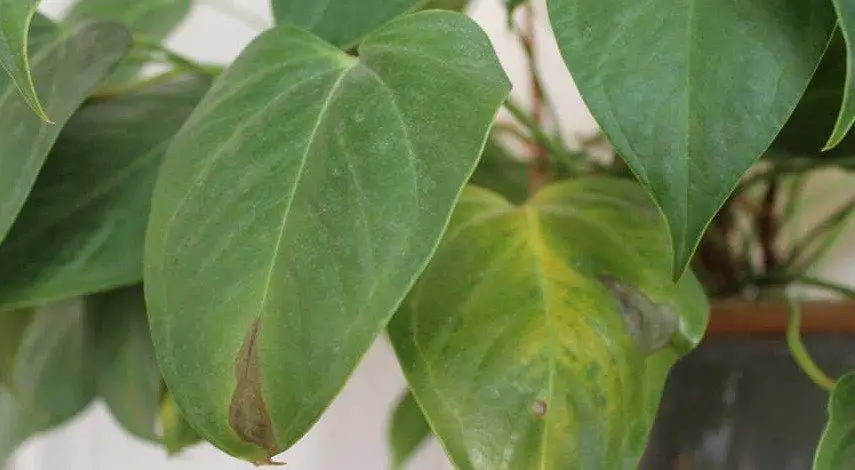
A sunburned philodendron will look like it has been burned with a welt or blister on the top of its leaves. These blisters will be very dark and possibly look like they have started to rot…
Also, the leaves that are closest to the sun will turn brown and crispy. Because the lower leaves are beneath the shade of the upper ones, they do not come into contact with direct sunlight.
If you leave philodendron in direct sunlight for too long, this damage can spread throughout the entire plant.
Can Philodendron Recover From Sunburn?
Yes, philodendron can recover from sunburn given enough time. However, you should make sure that the plant is not exposed to direct sunlight and does not get burned again.
Will Burned Philodendron Leaves Turn Green Again?
No, it is unlikely for burned philodendron leaves to turn green again. After the leaves of the plant have become brown, they can no longer be regenerated.
If you take steps to cool burned philodendron leaves down, however, it is possible for your whole plant to recover! Misting the plant with water every day, especially while it is young, will help keep its leaves hydrated until new growth appears.
Will Sunburn Affect The Philodendrons Lifespan?
Yes, if left untreated, sunburn on philodendron plants can cause the plant’s leaves to fall off and even lead to its death. This is why it’s important to take immediate action when you notice signs of sunburn on your philodendron plant.
However, if you act quickly, then your philodendron will recover and live a happy life for years and years to come. In fact, I have a philodendron that is over 10 years old.
Conclusion
In conclusion, it is important to make sure that your philodendron doesn’t get sunburned. Make sure it isn’t exposed directly to the sunlight for extended periods of time and always rotate the pot at least once per day.
If you find any scorched, brown leaves on your plant’s stem, then just cut them off with pruning shears. Also, keep the plant in a shaded area for a few days until it recovers.
Many people know that humans can get sunburns, but did you know that plants can also be affected by this?
One of the most popular houseplants is monstera deliciosa. This plant has large leaves with a waxy texture and fenestrations all over. So, how well does this plant handle the sun? Let’s find out…
Can Monstera Get Sunburn?
Yes, monstera plants can get a sunburn if they are kept in direct sunlight for too long. However, this only happens in extreme cases when the sun is remarkably hot.
Monsteras are grown outside in many hot climates and rarely get sunburnt, so you should be fine if you monitor the plant closely. Perhaps be careful by protecting your monstera during the hottest days of the year.
How to Prevent Monstera Sunburn?
You can prevent monstera sunburn by moving your plant to an area that doesn’t receive direct sunlight. This will prevent your plant from baking under the sun and getting its leaves scorched.
You can also place a large umbrella over it or build an outdoor shelter that blocks out sunlight, as you would for other plants that shouldn’t be kept in direct sunlight.
If you grow your monstera inside, then protect it from extreme rays by using curtains and blinds to block out the sun. Blinds are great because they don’t block the sun completely, which mimics the natural light monstera plants receive in the wild.
Those who use grow lights should position the light in a way that isn’t too close to the plant. I recommend leaving a gap of at least twelve inches to prevent scorching.
When Is Monstera Sunburn Likely To Occur?
Monstera sunburn usually occurs when the plant is kept in direct sunlight for too long. This will most likely happen during summer days, but it can also occur on exceptionally hot and sunny winter days as well.
It is more likely to happen when the plant is moved outdoors, or if the plant is placed in a window that gets too much sun.
If you are growing your monstera outside, be extra careful during hot summer days and monitor its leaves closely. If they start looking dry or charred on one side of the leaf, then move them out of direct sunlight immediately!
What Are The Signs Of Monstera Sunburn?
A sunburned monstera has brown or dark spots on its leaves, and the edges of the leaves will be dry and crispy.
While leaf spot disease can also give brown leaves, fungal problems tend to cause leaves to become moist and sticky. Sunburned leaves are more dry and crispy, with the brownest leaves on the top of the plant where the sunlight hits most frequently.
Can Monstera Plants Recover From Sunburn?
Yes, monstera plants can recover from sunburn if the leaves are moved to a shadier area.
You should also make sure that your monstera’s soil is moist and not too dry, as this can cause damage or scorching on its own.
Over time, new leaves will grow in with no signs of the previous burning! However, it may take several months to grow back.
Monstera plants that are grown outdoors will rarely suffer from sunburn unless they’re placed in direct sunlight for too long during the hottest days of summer.
Those who keep their monsteras indoors should be careful with bright lights and windows, as these can mimic sunlight. By using curtains or blinds to block out light, you’ll be able to protect your monstera from sunburn.
Will Burnt Monstera Leaves Turn Green Again?
No, the scorched leaves will turn black and crispy. Even if you start giving the plant the correct care, the burnt leaves won’t suddenly turn green again. You should remove them from the plant as they can harm its growth and health if left alone.
The good news is that new foliage will grow with no signs of burning. Well, as long as you don’t cook it again with too much sunlight!
Will Sunburn Kill My Monstera?
No, sunburn won’t kill your monstera, but it can damage the plant and leave it vulnerable to other issues. For example, the leaves may be attacked by pests, fungi, or disease.
Keeping your monstera healthy by ensuring its soil is moist and giving it a correct amount of light will help prevent these problems from occurring.
Conclusion
In conclusion, monstera plants are extremely tough and can withstand many issues. But they aren’t invincible, which means you should always be careful with them to ensure their health and growth.
To protect your monstera from the sun’s rays, make sure it gets enough shade during summer days or grow it indoors where sunlight isn’t a problem. Never place the plant in direct sunlight or close to a bright window.
By doing this, you should be able to prevent sunburn from occurring and keep your monstera healthy for years!