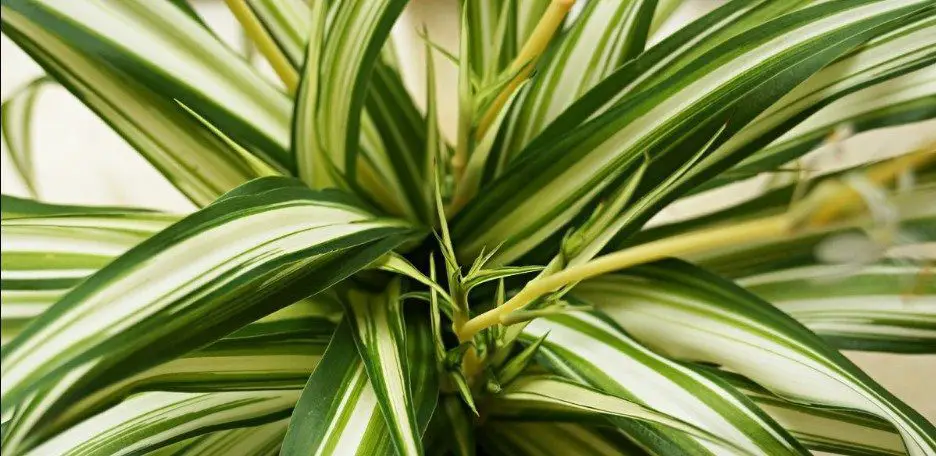
Spider plants, or Chlorophytum comosum, are popular houseplants that can be found in many homes across the world. The plant is well known for its ability to thrive even with little care and good air circulation.
However, there are times when spider plants may lose their color or become wilted or pale on the leaves. This article discusses some reasons why this might happen and what you can do about it!
Why Does My Spider Plant Have Pale Leaves?
Your spider plant has pale leaves because ofone or more of the following issues:
Not enough light
Not enough fertilizer
Too much water
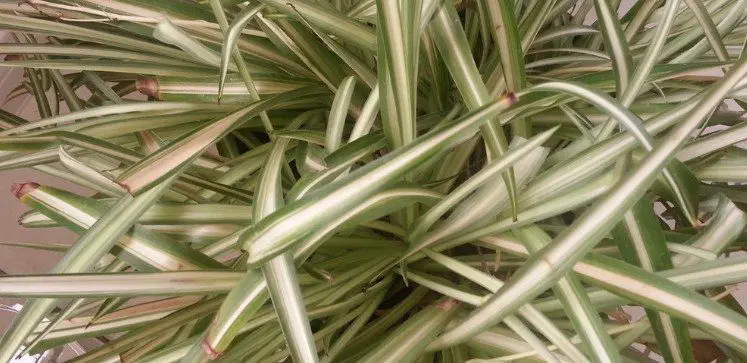
The washed-out color shows that your spider plant isn’t getting something it needs to thrive. This is most commonly because of a lack of fertilizer or light, which is why we’ll be focusing on them in this article.
Lack of Light?
Your spider plant may have pale leaves because it isn’t getting enough light. If your houseplant is not located near a window or it’s currently winter where you live, then the color of your spider plant will fade and become washed out.
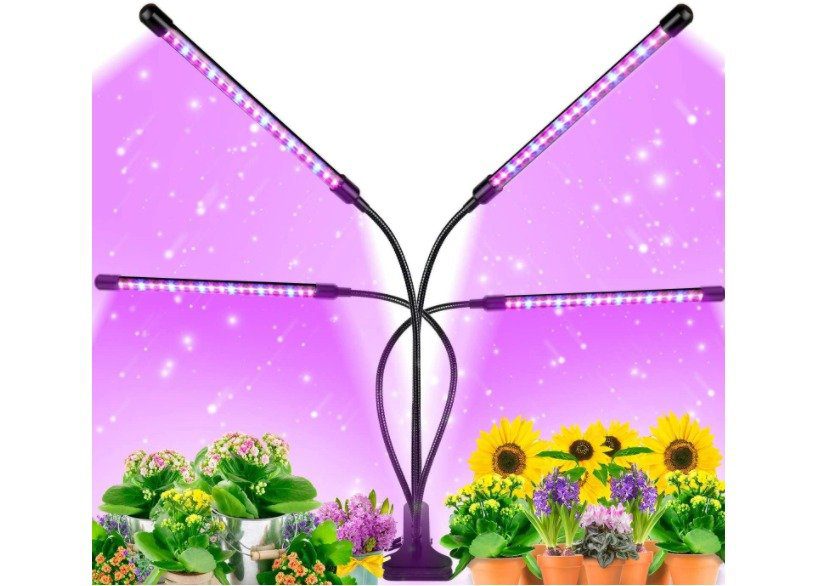
You should move it closer to an unobstructed sunny window with southern exposure (south-facing), but if this isn’t possible, you can supplement the plant’s lighting with a full-spectrum grow light.
These grow lights are different from standard incandescent light bulbs, fluorescent lights, or LED lights because they can provide the correct sort of lighting that is needed for plant growth.
Not Enough Fertilizer?
Your spider plant may pale leaves because it is not getting enough fertilizer. It may also have small brown spots on some of its leaves or even turn yellow. This happens if your houseplant is lacking in nutrients that are necessary for healthy growth—namely nitrogen and phosphorous!
Keep feeding it every two weeks during the Spring/Summer season (every three to four weeks depending on how fast the foliage grows) until Autumn begins. Taper off gradually by stopping altogether once the nighttime temperature drops below 60 degrees Fahrenheit. Remember that too much fertilizer will burn your plants, so follow the care instructions on the label.
Not Enough Water?
Your spider plant may not be getting enough water to grow luscious green leaves. Spider plants are well known for their ability to thrive when they don’t get watered often.
However, if your foliage looks shriveled and/or wrinkled, or the ends of its fronds look brownish in color (instead of green), there’s a chance that you’re not giving enough water. Underwatering can cause the foliage to turn pale, become limp and eventually wilt.
Following a strict watering schedule is not the answer because every plant is different. Some houseplants need a lot of water while others can go for weeks without getting watered at all!
You should water spider plants when the top half-inch or so of soil feels dry. You’ll know if you’ve waited too long between watering sessions because the soil will be dry deep down. Using a moisture meter is an even more accurate way to assess things.
Conclusion
In conclusion, your spider plant has pale leaves because of one or more of the following reasons: not enough light, not enough fertilizer, or not much water. If your houseplant is missing some color on its foliage, you can address this by moving it closer to a window (or supplementing with artificial lighting); feed every two weeks during spring/summer.
After addressing the above issues, your spider plant should be looking healthier and you can continue to provide them with proper care.
Spider plants are popular houseplants because of their ability to grow in low-light conditions. However, if left unchecked, spider plant leaves turning white can be an issue.
Fortunately, the problem is often easy to fix with some simple steps! In this article, we will review what causes spider plant leaves to turn white and how you can take care of them so that your plants stay healthy and happy.
Why Are My Spider Plant Leaves Turning White?
The most common reason why spider plant leaves turn white is powdery mildew. This fungus can be found on a variety of plants, including spider plant leaves. Powdery mildew is most prevalent in areas that are hot and humid or have poor airflow.
What Can I Do About It?
If you have white powdery mildew on your spider plant leaves, then the first step is to increase airflow in that area of your home or office. Watering less can also help with this problem because overwatering makes conditions prime for powdery mildew growth.
Additionally, making sure there are no areas where water pools and adding some pebbles to trays under plants can make it more difficult for fungus spores to find a good place to land and start growing again! Make sure you use an organic pesticide if you feel like using one at all (some prefer not using them).
As powdery mildew is a fungal infection, I use this neem oil (Amazon link) in my house. I use it when the spider plant leaves turn white because of powdery mildew, and also when pests start attacking my plants.
Is It Really Powdery Mildew?
You can spot powdery mildew by its white, dusty appearance and the fact that it tends to grow on both sides of leaves.
If you are unsure about whether your plant has powdery mildew or not, one way to tell is by checking if any other plants in your home have it as well. If they do then chances are high that this is what you’re dealing with! Or take a leaf from each plant into consideration and compare them side-by-side for signs of similar damage.
It’s important to note though that spider plant leaves turning white can also be caused by nutrient deficiency, pests such as thrips, and even root rot brought on by overwatering and cold soil temperatures. However, fungal infections are the most common reason for spider plant leaves turning white.
Conclusion
In conclusion, spider plant leaves turning white is a very common issue. Luckily, it can be dealt with pretty easily by increasing airflow and using neem oil to deal with the powdery mildew.
Also, make sure you are not overwatering your spider plant. Spider plants do very well in dry conditions! If the soil is too wet it can lead to root rot, which will cause white spots on leaves and rotting stems etc.
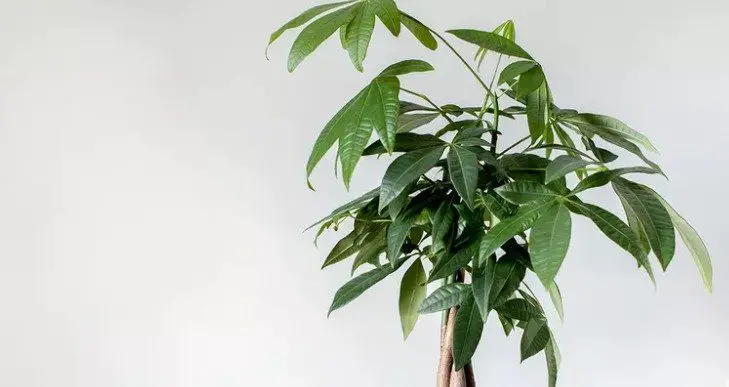
One of the most important factors to consider when planting a money tree is light. In order for your plant to grow, it needs a healthy amount of sunlight. If you don’t have enough natural light in your home or office, then you can use artificial lights such as grow lights.
The purpose of this blog post is to discuss which type of grow light produces the best results what specific light is best for your situation. Let’s get started!
Best Grow Light for Money Tree
The first light on our list is appropriate for almost every scenario and is the one I rely on for nearly all of my plants. I will then review a more affordable money tree grow light that is efficient and effective.
This is my personal favorite grow light for money trees because it has a load of smart features, can be angled to the perfect position, and emmits the best type of light for growth.
The LED light may be adjusted to nine distinct levels, allowing you to match it to the needs of your plant. Sometimes you don’t need a powerful light, whereas other times you do. The Ezorkas light can be easily adjusted to meet any of these needs.
The light is fitted with a timer that can be set for up to twelve hours. This is perfect because it allows you can adjust the light according to your schedule so that you don’t have to worry about forgetting.
The stem (if you pardon the pun) can be twisted and turned to the perfect angle, which is great for money trees since they are traditionally grown in an upright position.
The Ezorkas light also emits the perfect type of red and blue wavelengths needed for photosynthesis to take place throughout the day cycle, allowing your plant to grow at its maximum potential.
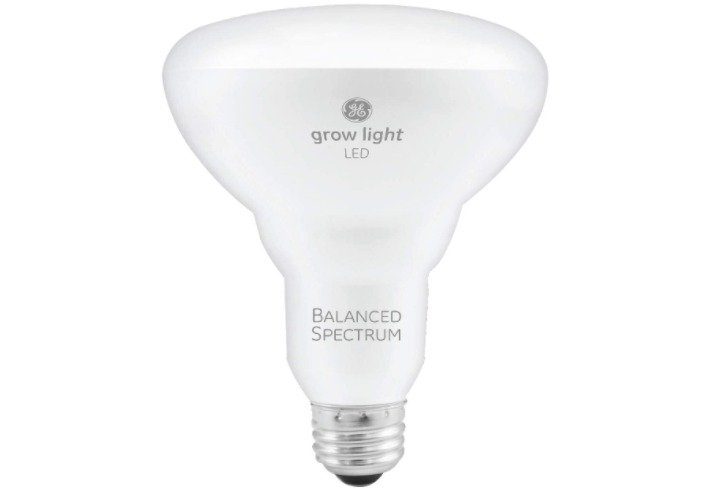
For those who just wanted something small and simple, the GE Grwo Light is a great option. I’ve included this light on our list because it’s still effective, even though many people often ignore compact grow lights. This little thing packs quite a punch!
The GE Grow Light can be used as a supplement to natural sunlight or any other grow light you may already have and it emits just the right wavelengths for efficient growth.
I would recommend this light as an affordable supplement or replacement for any other grow lights you may have laying around the house. It works just as well as most higher end grow lights and can easily be tucked away in a corner or closet.
The bulb also won’t affect your energy bills in such a harsh way. In fact, it consumes just 9 watts of power, but emits the same amount of light as a 60 watt incandescent bulb.
Why Do Money Tree Plants Need Light?
Money trees need light to grow and thrive. Most plants need a minimum of six hours per day from indirect sunlight in order to grow properly. If your plant does not receive enough light, it will turn yellow and eventually die from malnutrition.
This is because photoautotrophic cells in the plant require light to function and create food for it. The more lights you provide your money tree (if natural sunlight isn’t available), the better chance you have of keeping a healthy, happy plant.
Will A Grow Light Help My Money Tree Grow?
Yes! I have seen many money trees thrive with a grow light. The key is to provide the right lighting for your plant and ensure it receives enough sunlight on a regular basis if you don’t have a naturally lit room or office space where you can place the tree.
This will allow you to keep your money tree healthy indoors without worrying about moving it around too much. I mainly use my grow light on money trees during winter, when they don’t get enough natural sunlight.
How Many Hours of Light Should I Give My Money Tree?
Money trees require at least six hours of sunlight daily. If you are using a grow light, it is not necessary to keep your plant in front of the lights all day every day unless you want to encourage faster growth.
The exact amount of time varies depending on many factors, like the size of your plant, the type of grow light you use, and the season.
What Kind Of Grow Light Should I Use for Money Tree?
There are a variety of options available for the best grow light. These include fluorescent, LED, and incandescent lights which differ in their color spectrum output.
One of my favorite types is full-spectrum indoor lights because they are affordable, easy to use, and very efficient at growing plants indoors. The full-spectrum light is the best at mimicking the sun’s natural rays.
Conclusion
In conclusion, the best grow light for your money tree is an LED or full-spectrum indoor light. If you do not have access to natural sunlight, then you should definitely invest in one of these types of lights as they will allow your plant to thrive throughout the year indoors.
I hope this article was helpful and answered all of your questions about the best grow light for money tree. If not, please leave a comment and I will be happy to respond.
It can be difficult to find the best grow light for philodendron. There are so many different options and it can seem like a daunting task. In this post, we will start by talking about why philodendron plants sometimes need to be given artificial light.
We will then review some of our favorite models that we recommend for philodendrons specifically. We hope this information is helpful in your search…
Best Grow Light for Philodendrons
Let’s get started with my top two grow lights. The first is appropriate for almost any scenario and is the one I personally use. The second option is a low-cost philodendron grow light that is easy to set up and use.
Philodendron plants require a specific type of grow light. This is the best grow light for philodendrons because it’s easy to use, comes with a variety of smart features, and emmits both red and blue light.
The LED light has nine adjustable levels, allowing you to tailor it to your plant’s requirements as needed. The 100% power setting is ideal for when your philodendron is suffering from lack of light during the winter or in dark rooms.
You can set a timer that controls how long the light stays on for, which is perfect if you need to leave the house for a bit. There’s also a power cable and an on/off button, making it simple to switch off when not in use.
You can adjust the angle of your LED lights to suit any taste. With multiple plants, you may need to position them over each one individually or just change their height for an even distribution of light.
It’s easy to see how this grow light is one of the best choices for philodendrons on the market. It has all these great features that make your plants look and grow beautifully!
The GE Smart Light bulb is a energy efficient and long-lasting lamp that will not disappoint. It also comes with an extra-long life of 25k hours and money-back guarantee.
The LED light bulb is the new way to reduce your energy bills. It uses just 9 watts of power but produces just as much light as 60 watt incandescent bulbs.
The GE grow light has the most micromoles available on the market, making it ideal for nurturing your plants. This is a high PPF rate that few other lights have.
Why Do Philodendron Plants Need Light?
Philodendron plants are tropical plants that need high humidity and moderate light. Plants need light to photosynthesize, which is the process where plants use energy from light to create growth.
If you don’t provide philodendrons with enough light they will become spindly and produce small leaves that are pale in color. They can even stop growing altogether! This is especially true for young specimens or if your plant has recently been transplanted.
If you notice your philodendron isn’t growing as fast or is looking unhealthy, it’s usually because of inadequate light. To fix this problem all you need to do is find the best grow light for philodendrons and provide your plant with more bright indirect sunlight!
Will A Grow Light Help My Philodendron Grow?
Yes! In fact, a grow light is one of the best ways to help philodendrons grow. If you have a young plant it’s hard to provide enough light during winter or in an office that doesn’t get much natural sunlight.
How Many Hours of Light Should I Give My Philodendron?
For the best results, give your philodendron a total of 4-12 hours per day. Because they are tropical plants, you should provide them with the most possible light during winter when it’s cold outside and there is less available sunlight!
You can tell your philodendron is getting enough light when it has large, healthy leaves. If you notice small pale or yellowed leaves, then the plant isn’t receiving enough light!
If this happens, move your plants to a brighter area and see if they start growing again. Philodendrons are tough so don’t worry if you’ve made the mistake of giving them too little light in the past.
What Kind Of Grow Light Should I Use for Philodendron?
There are several options when it comes to grow light for philodendrons. The best option is to use full-spectrum grow lights! These lamps are designed specifically to work with plants and will give your philodendron exactly the kind of light it needs.
Conclusion
In conclusion, I hope this post has been helpful in your search for the best grow light for philodendron! These plants need a lot of bright indirect sunlight, so I recommend getting one of our recommended models which will help provide sufficient lighting.
The best grow light for pothos is a question that many people ask themselves when they are trying to figure out how to take care of their plants. With so many different brands and types of lights available, it can be difficult to find the right one.
This article will talk about the benefits of using grow lights with your plants, as well as some recommendations on what type you should use depending on your needs.
Best Grow Light for Pothos
I’ll go through my top two pothos grow lights now. The first is ideal for almost any scenario and is the one I use, while the second is an affordable pothos grow light that does the trick.
This is the ideal grow light for pothos plants since it’s simple to use, comes with a range of smart features, and has a blend of red and blue light. It includes 32 red lights and 16 blue lights, to be precise.
The light has nine dimmable settings, so it’s simple to alter as your plant’s needs alter. If you really need to save your pothos from a lack of sunlight, then set it to 100% power.
You can set the timer to turn on or off at whatever time you choose, so it is convenient for when you are away from home or just need the light off for a while. It also includes a power cable and an on/off button, making it easy to switch off when needed.
Finally, you may adjust the angle of the LED lights to your liking, allowing you to position them correctly over your pothos plant. This is great if you have a large plant that needs the light to be positioned over it.
All of these features make this one of the best grow lights for pothos on the market, which is why I chose it as my personal go-to solution for growing plants at home. You can get yours here.
This is another fantastic grow light for pothos plants that I adore. It’s great because it’s so simple to operate. Simply attach it to any type of lighting fixture and then switch it on.
The simplicity and affordability mean it’s great for anyone shopping on a budget, but it still gives your plant the light it needs, just like the more expensive models.
This bulb has an extra-long life of 25,000 hours and is energy-efficient. It also comes with a 12-month warranty, which means that if the light stops working within the first year of ownership, GE will replace it for free.
Because of its high efficiency, this LED light consumes just 9 watts of power but produces as much light as a 60watt incandescent bulb.
The GE grow light offers the most micromoles available on the market today, allowing it to nourish your plant. This is an impressive PPF rate that not all lights can match.
Why Do Pothos Plants Need Light?
Pothos plants are a type of vine that need light in order to grow. This is because the plant gets most of its energy from photosynthesis, which requires sunlight. If you do not give your pothos enough light it will begin to look unhealthy and stop growing entirely.
Will A Grow Light Help My Pothos Grow?
Yes! In fact, a grow light is the best way to ensure that your pothos plant grows well and stays healthy. While placing your plant directly in front of some sunlight will help it thrive, this isn’t always possible or practical – especially during winter months when there may not be enough natural light for the plant to survive indoors.
For a pothos that is grown as a houseplant, the best amount of light you should give it is between 4 and 12 hours per day. You will want to make sure not to overdo it on the length of time though – this can cause problems for its growth also.
What Kind Of Grow Light Should I Use for Pothos?
There are many different grow lights available on the market today, including incandescent bulbs and fluorescent tubes. To determine which one is best for you will depend largely upon how much space you have in your home/office as well as what type of budget you want to work with!
Full-spectrum is the best type of grow light for plants because it is closest to natural sunlight. These lights are more expensive than other types of bulbs, but they provide the best results and will save you on energy costs in the long run.
Conclusion
In conclusion, the best grow light for pothos is a full-spectrum bulb that provides your plant with a few hours of artificial light each day. If you are looking to buy one, it’s important to remember that they can be expensive but will provide the best results in terms of healthy growth.